
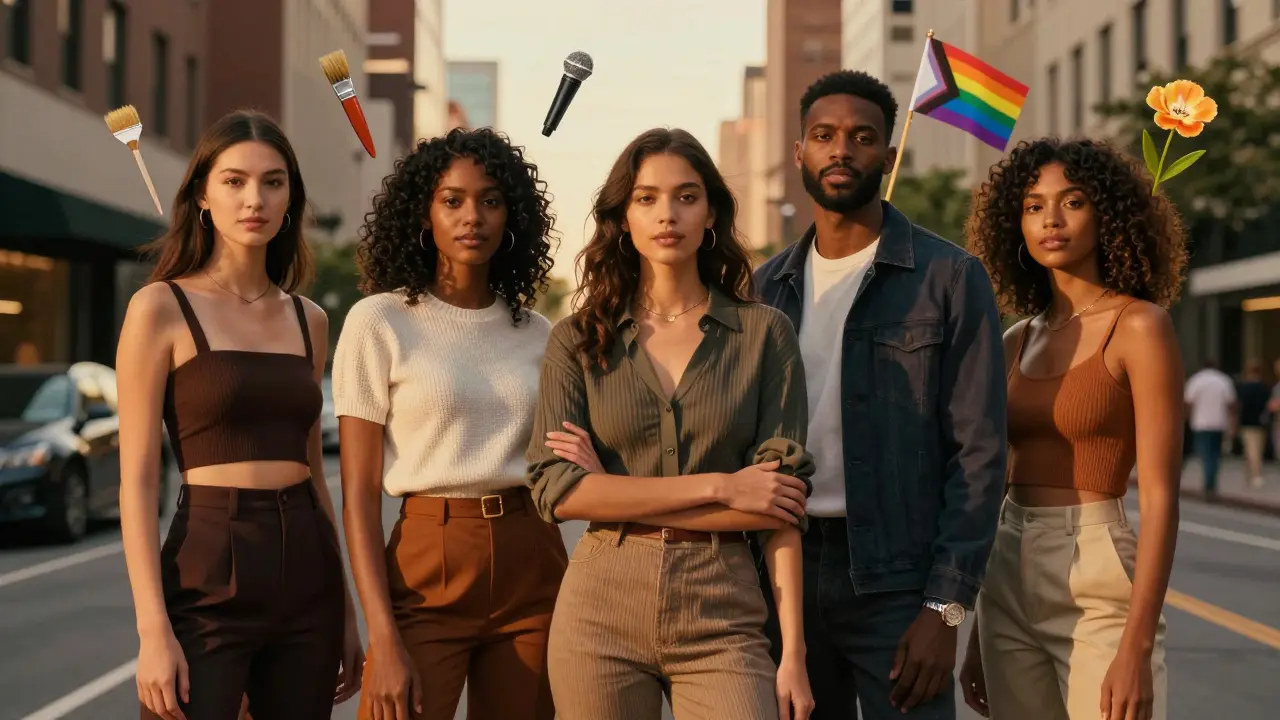
Forget the airbrushed perfection of the 90s. Today’s top models aren’t just walking runways-they’re changing the game. They’re activists, entrepreneurs, and authentic voices in a world that finally stopped pretending there’s only one way to be beautiful. If you’ve been wondering who’s really leading fashion now, it’s not who you think. It’s not just the names on billboards. It’s the ones breaking rules, redefining standards, and refusing to fit into a mold.
What Changed? The Death of the One-Size-Fits-All Model
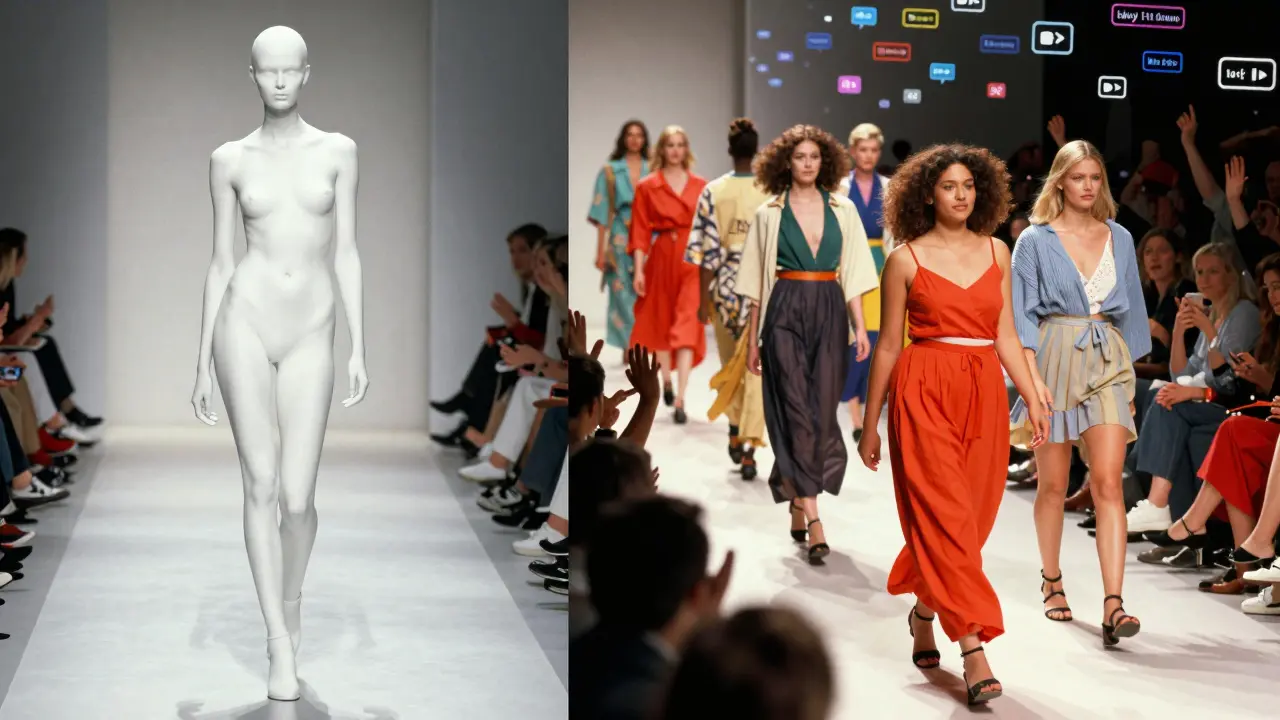
Twenty years ago, top models meant tall, thin, and mostly white. If you didn’t fit that mold, you didn’t walk in Paris or New York. That wasn’t just a standard-it was a gate. But something cracked open around 2018. Social media didn’t just give people a voice. It gave them a platform to call out hypocrisy. Brands that ignored diversity started losing sales. Consumers didn’t just want to see themselves in ads-they started demanding it.
By 2025, the top 10 models on the Forbes list didn’t just have 10 million followers. They had 100 million combined. Why? Because they weren’t just selling clothes. They were selling identity. Ashley Graham didn’t just model curves-she made plus-size fashion mainstream. Sam Smith didn’t just walk in a show-they redefined gender on the runway. And that shift? It stuck.
Who Are the Top Models in 2026?
Let’s cut through the noise. These are the five names dominating fashion right now-not because they’re the tallest, but because they’re the most influential.
- Amber Liu-a Chinese-American model who broke into Paris Fashion Week without agency backing. She now owns her own sustainable label and has over 12 million Instagram followers.
- Yara Shahidi-yes, the actress. But she’s also the face of Fenty Beauty’s latest campaign and the first non-binary model to land a global contract with L’Oréal.
- Valentina Sampaio-the first openly transgender model on the cover of Sports Illustrated Swimsuit. She walks for Victoria’s Secret, Balenciaga, and Chanel.
- Omari Hardwick-a 6’4” Black male model who’s redefining masculinity in menswear. He’s done campaigns for Gucci, H&M, and even Apple.
- Leila Lopes-a 42-year-old Portuguese model who started her career in her 30s. She’s now the face of L’Oréal’s anti-aging line and proves age isn’t a barrier-it’s an asset.
Notice anything? None of them fit the old mold. And that’s the point.
Why This Matters to You
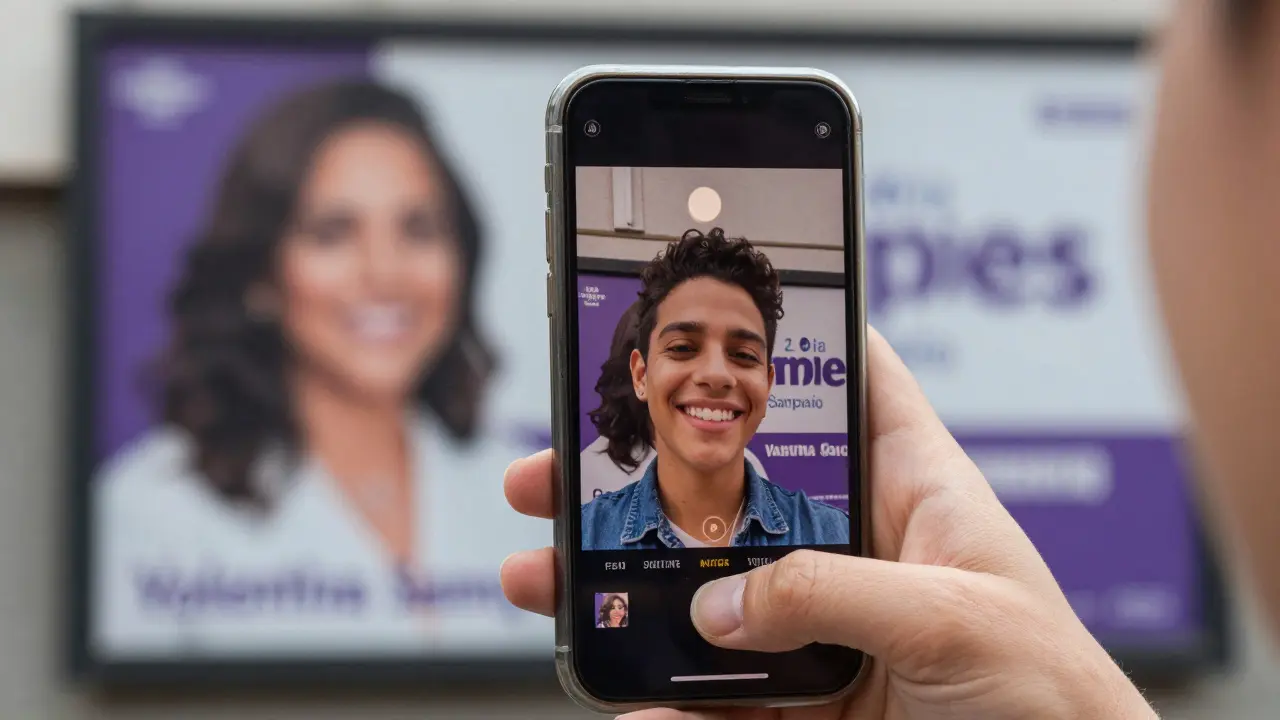
You might think, “I don’t care about fashion.” But here’s the truth: fashion doesn’t just reflect culture-it shapes it. When models stop being one-dimensional, they give people permission to be themselves. A teenager in Kansas sees Valentina on a billboard and thinks, “Maybe I’m not broken.” A woman in Tokyo sees Leila and realizes, “I can still be beautiful at 40.”
This isn’t just about diversity for PR. It’s about economics. A 2024 McKinsey study found that brands with diverse models saw a 32% increase in customer loyalty. That’s not a trend. That’s a business imperative. The old models didn’t disappear-they were replaced by something more powerful: real people.
How the Industry Changed Behind the Scenes
It wasn’t magic. It was pressure.
Agencies that once refused to sign models over size 6 are now scouting at body positivity festivals. Designers who once ignored wheelchair users now design adaptive clothing lines. Casting directors? They’re using AI tools to analyze diversity metrics before a show even starts.
And the rise of independent modeling? Huge. Platforms like ModelMayhem a global community platform that connects models directly with brands without traditional agencies have grown 400% since 2020. You don’t need a big agency anymore. You just need a camera, a story, and the courage to post it.
What’s Next? The Rise of the Hybrid Model
The top models of 2026 aren’t just models. They’re creators.
Amber Liu doesn’t just walk for designers-she designs. Yara Shahidi produces short films about identity. Valentina Sampaio launched a nonprofit for trans youth in fashion. Omari Hardwick hosts a podcast on masculinity and mental health. Leila Lopes runs a mentorship program for older women in media.
The future isn’t about who looks the best in a dress. It’s about who uses the platform to change something. The model who speaks up gets more contracts than the one who smiles quietly.
How to Spot Real Influence vs. Hype
Not everyone calling themselves a “top model” is one. Here’s how to tell:
- Do they have their own brand, product, or project? Real influence builds something beyond the runway.
- Do they speak about systemic issues? Sustainability, equity, mental health? Superficial posts don’t last.
- Do they work with independent designers or small brands? The real change-makers often choose ethics over big budgets.
- Is their following engaged? 500K followers who comment and share matter more than 5 million who just scroll.
If someone’s just posing in designer clothes with no message behind it? They’re a model. Not a top model.
Comparison: Old-Style vs. New-Age Top Models
| Aspect | Old-Style (Pre-2018) | New-Age (2026) |
|---|---|---|
| Body Type | Extremely thin, uniform height | Varied sizes, heights, and proportions |
| Representation | Primarily white, cisgender women | Multi-racial, LGBTQ+, disabled, older |
| Agency Control | Exclusive, top-tier agencies only | Direct brand deals, self-managed |
| Public Role | Passive face of a brand | Activist, entrepreneur, content creator |
| Income Source | Runway, editorials | Brands, own products, media, speaking |
Frequently Asked Questions
Are traditional models still relevant?
Yes, but they’re no longer the norm. Traditional models still work-especially in luxury fashion-but they’re no longer the faces of global campaigns. The market has shifted. Brands now prioritize authenticity over perfection. A model who fits the old mold can still book jobs, but they’ll likely be for niche markets, not mainstream advertising.
Can anyone become a top model today?
Absolutely-but not the way it used to be. You don’t need to be 6 feet tall or size 0. You need to have a story, a point of view, and the courage to share it. Many top models today started on Instagram or TikTok. They posted photos of themselves, spoke about their experiences, and built a following. Brands noticed. The door is open. But you have to walk through it yourself.
Do top models still get paid well?
Some do-really well. The top 5% still earn millions from campaigns and endorsements. But the majority earn between $50,000 and $200,000 a year. What’s changed? Many now have multiple income streams: product lines, YouTube channels, books, speaking gigs. The old model of just walking runways is gone. Today’s top earners are entrepreneurs first, models second.
Is the modeling industry still toxic?
It’s improved, but not fixed. Body shaming, pressure to lose weight, and exploitation still happen-especially in smaller markets. But there’s now accountability. Social media exposes bad behavior. Laws in the EU and U.S. now require agencies to disclose health standards. More models are unionizing. Change is slow, but it’s real.
What’s the biggest myth about top models today?
That they’re lucky. They’re not. They’re disciplined. They show up. They learn. They speak up. They build businesses. They handle rejection. The new top models work harder than ever-not just to look good, but to make sure the industry doesn’t go back to the way it was.
Final Thought: The Real Power of a Model
Top models in the new age aren’t just wearing clothes. They’re wearing their truth. And that’s what makes them powerful. They didn’t wait for permission. They didn’t wait for a casting call. They started with a selfie, a story, and a stance. And now, they’re not just in the spotlight-they’re changing it.
If you’re wondering how to find your own place in this new world-start by asking: What do you stand for? Because that’s the only thing that lasts longer than a trend.

prajesh varma
Bro, this post is fire. Remember when models were just mannequins with perfect cheekbones? Now they’re CEOs, poets, and revolutionaries in Louboutins. Amber Liu didn’t wait for a casting call-she built her own damn runway. And Valentina? She didn’t just break barriers-she turned them into fucking art installations. This ain’t fashion. This is fucking liberation with a side of merch drops.
Selene Becmar
Oh, darling, how *profound*-a world where beauty is no longer a monolith but a kaleidoscope of trauma, triumph, and TikTok virality. 🌈✨ I weep for the ghost of Kate Moss, who once whispered silence into the lens… now we have Yara Shahidi turning runways into therapy sessions. Is this evolution? Or just capitalism with better PR? I’m not sure, but I’ll take it-with a caviar garnish, of course.
Carli Lowry
I love how this piece highlights Leila Lopes-not just as a model, but as a living testament to the fact that grace doesn’t expire. There’s something deeply poetic about a woman in her 40s, with decades of lived experience, becoming the face of an anti-aging campaign. She’s not fighting time-she’s redefining it. And that’s the kind of quiet power we need more of. Also, proper grammar on ‘L’Oréal’? Yes. Thank you.
Enuma Eris
This shift is long overdue. Models used to be props. Now they’re people with platforms. That’s not trend. That’s truth. Simple.
George Christopher Ray
While the sentiment expressed in this article is ostensibly laudable, one must interrogate the underlying economic structures that enable this so-called ‘diversity.’ The commodification of identity as a marketing strategy is not liberation-it is neoliberal co-optation. The very brands that once enforced Eurocentric beauty standards are now profiting from performative inclusion. One must ask: Are these models empowered, or are they merely the new face of corporate exploitation? The data may show increased loyalty, but at what cost to authenticity?
Rich Beatty
You know what’s cool? The fact that someone can start with a phone camera and end up on a Balenciaga runway. No gatekeepers. No ‘you’re not tall enough’ or ‘you’re too old.’ Just raw courage. If you’ve got a story, post it. Someone out there needs to see it. You don’t need permission-you just need to show up. Keep going, everyone. You’re doing better than you think.
Cody Deitz
It’s fascinating how the definition of ‘influence’ has shifted from passive representation to active creation. The old model was a vessel. The new model is an architect. Amber Liu designing her own line, Valentina launching a nonprofit, Omari hosting a podcast on masculinity-it’s not just about who’s in the frame anymore, but who’s reshaping the entire system. This isn’t just fashion. It’s a cultural reset. And it’s happening because people refused to wait for someone else to fix it.
Ronnie Chuang
this is just woke propaganda. they replaced real models with activists. why should i care if some tranny walks in a show? real fashion is about elegance, not politics. and why is omari hardwick even on this list? he's an actor. stop forcing diversity. america is turning into a circus.
j t
You know, I’ve been thinking about this for weeks. It’s not just about models anymore. It’s about how we’ve been conditioned to believe that beauty is something you’re given, not something you claim. The old system told you to shrink, to smile, to be silent. Now? They’re saying: take up space. Speak. Build. Even if you’re 42. Even if you’re trans. Even if you’re not white. Even if you’re not 6 feet tall. The truth is, the industry didn’t change because someone had a good idea. It changed because enough people got tired of being told they didn’t belong. And they said: fine. I’ll make my own belonging. And now it’s everywhere. Not because it was easy. But because it was necessary.
Melissa Perkins
I just want to say how much this means to young girls everywhere-especially those who’ve been told they’re ‘too much’ or ‘not enough.’ When Leila Lopes stands on that billboard, she’s not just selling lotion. She’s telling a 12-year-old in rural Ohio, ‘You are worthy.’ When Valentina Sampaio walks for Chanel, she’s not just modeling a dress-she’s saying, ‘Your identity is valid.’ This isn’t just about clothes. It’s about dignity. And honestly? I’m so proud of how far we’ve come. Not perfect, but moving. And that’s everything.