
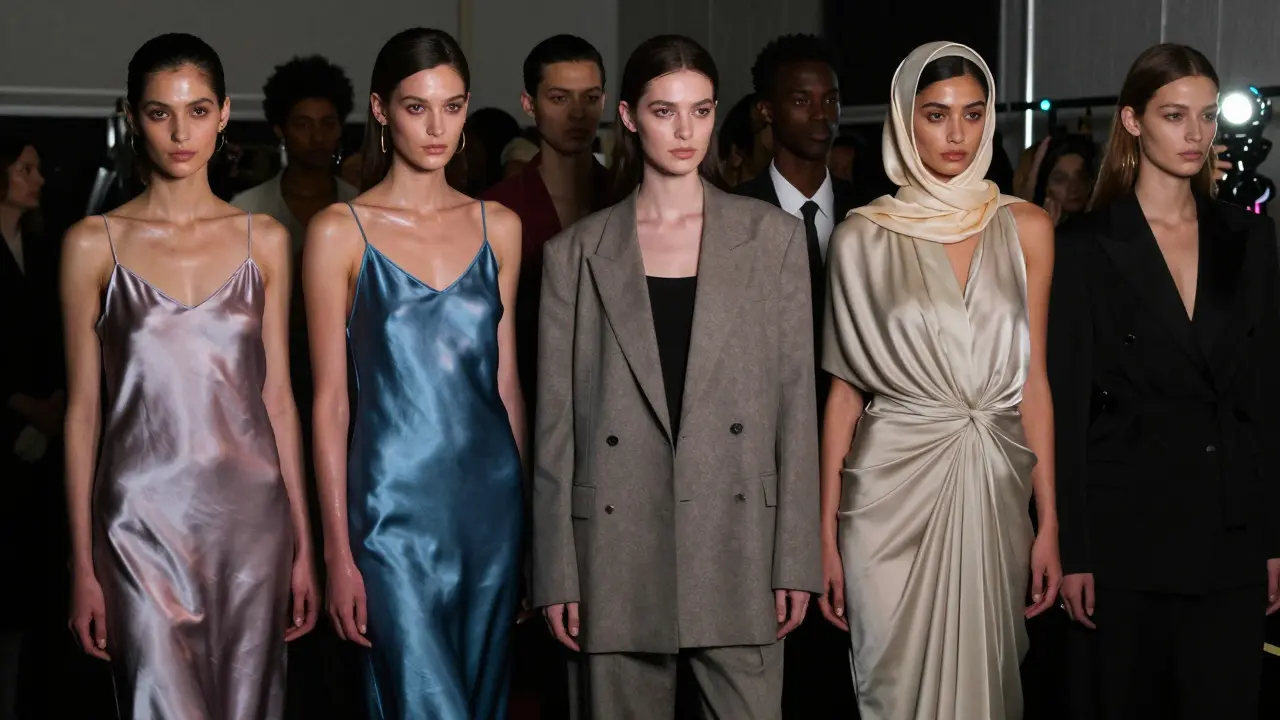
You’ve seen them on billboards, in magazines, walking down runways in heels that look like they were forged in a dragon’s forge. They move like they’re floating, eyes sharp, lips barely moving, every step calculated yet effortless. These are the top models-the faces that define decades, the names whispered in fashion houses from Paris to Tokyo. But what’s really behind that glow? Is it all lighting, filters, and luck? Or is there something deeper-something human-hidden under the glamour?
What Makes a Model ‘Top’?
Being a top model isn’t just about having the right cheekbones or a 34-24-34 frame. It’s about presence. It’s about the way you hold silence on a runway while ten thousand cameras flash. It’s about walking into a room and making everyone stop talking-not because you’re loud, but because you’re unforgettable.
In the 1990s, the term ‘supermodel’ was born. Cindy Crawford, Naomi Campbell, Linda Evangelista, Claudia Schiffer, and Kate Moss didn’t just model clothes-they became cultural icons. Evangelista famously said, ‘We don’t wake up for less than $10,000 a day.’ That wasn’t bragging. That was the market. These women commanded prices that rivaled movie stars. And they weren’t just pretty faces. They had personalities, opinions, and careers beyond the runway.
Today, the definition has expanded. Top models aren’t just tall, thin, and white. They’re diverse. They’re size-inclusive. They’re transgender. They’re older. They’re real. Brands now need models who connect with real people, not just fantasy. So when you see a 50-year-old model in a L’Oréal campaign or a plus-size model on the Victoria’s Secret runway, that’s not just progress-it’s the new standard.
The Anatomy of Grace: How Top Models Move
Grace isn’t something you’re born with. It’s trained. Top models spend hours practicing their walk-not just to look good, but to protect their bodies. They learn how to shift weight, how to engage their core, how to tilt their chin just enough to catch the light without looking arrogant. Some train with former dancers. Others work with movement coaches who specialize in posture and alignment.
Think about it: walking in 5-inch stilettos for 12 hours straight, holding a pose for a photo shoot, then jumping on a plane to another city-all while smiling and looking fresh. That’s not luck. That’s discipline.
And it’s not just about the walk. It’s the eyes. The subtle shift in expression. The way a model can go from icy to warm in a single blink. That’s called ‘reading the room.’ The best models know how to adapt their energy to the brand. A luxury perfume ad needs mystery. A sportswear campaign needs energy. Top models don’t just wear clothes-they become the mood.
Glamour Isn’t Just Beauty-It’s Storytelling
People think glamour is about glitter, designer gowns, and champagne toasts. But real glamour is storytelling. It’s the way a model makes you feel something before you even know the name of the brand.
Look at Adwoa Aboah. She’s not just a model. She’s an activist. She uses her platform to talk about mental health, opening up about her own struggles with depression. Her campaigns don’t just sell clothes-they spark conversations. That’s the new kind of glamour: one that has substance.
Or take Imaan Hammam, who grew up in a multicultural family and now walks for Chanel and Dior. His presence isn’t just about looks-it’s about representation. He doesn’t just wear the clothes; he carries the weight of what they mean to people who’ve never seen someone like him on a runway.
Today’s top models are curators of identity. They’re not just products. They’re voices. And brands that ignore that are falling behind.

From Runway to Reality: The Real Lives Behind the Photos
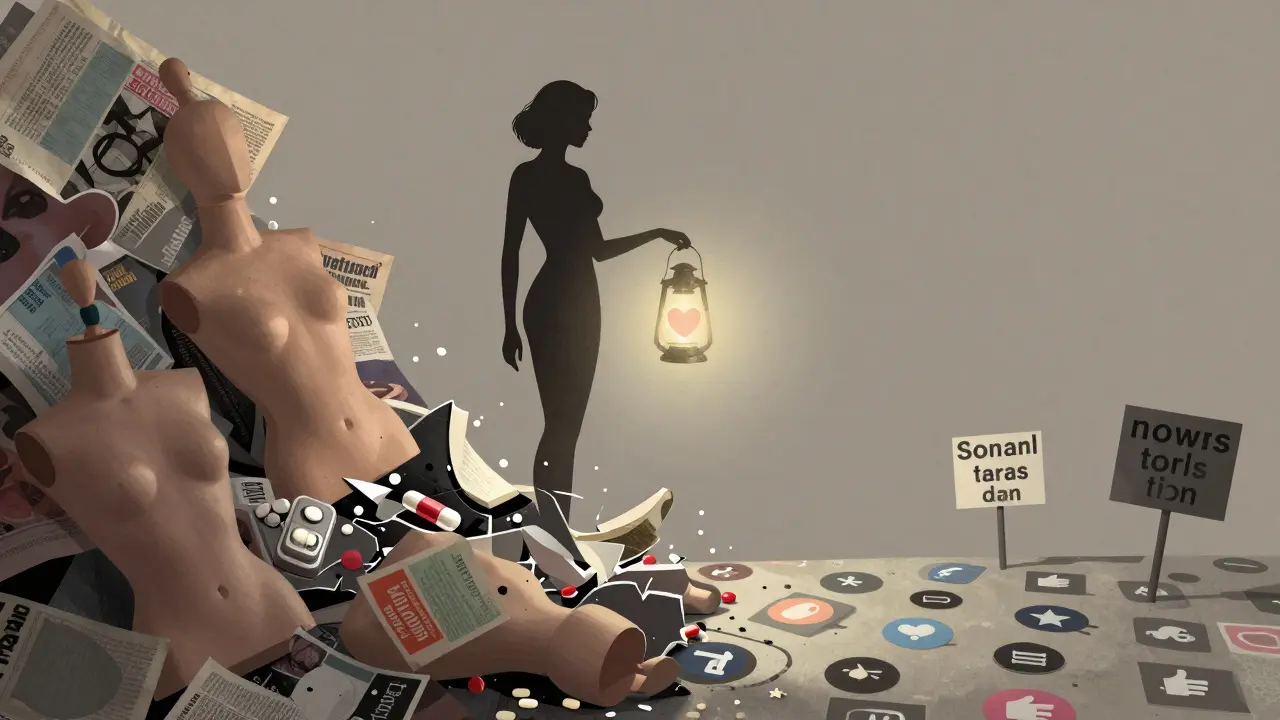
Here’s the part no one shows you: most top models aren’t living in penthouses in Monaco. Many live in tiny apartments in Brooklyn or shared flats in East London. They eat ramen between shoots. They cry after rejections. They deal with body shaming from agents, pressure to lose weight, and the loneliness of constant travel.
Even the most famous ones have days where they feel invisible. Gigi Hadid once said in an interview, ‘I’ve had days where I looked in the mirror and didn’t recognize myself. Not because I looked bad-but because I’d forgotten who I was outside of being a model.’
That’s the hidden cost of glamour. It’s not just about looking perfect. It’s about holding yourself together while the world expects you to be perfect 24/7.
But here’s the flip side: many top models use their platform to create change. Karlie Kloss started ‘Kode with Klossy,’ a coding camp for teenage girls. Naomi Campbell founded a foundation for young African designers. These aren’t just models. They’re entrepreneurs, mentors, and leaders.
Who Are the Top Models Today? (2025 Edition)
The game has changed. The old hierarchy of ‘the big five’ is gone. Now, it’s a global network of talent. Here are the names dominating 2025:
- Zendaya-Yes, she’s an actress, but her fashion influence is undeniable. She walks red carpets like they’re runways and has become a muse for Valentino and Dior.
- Yasmin Wijnaldum-Dutch model who broke barriers as the first Black model to open a Prada show in over a decade. She’s now a face of Chanel and Fendi.
- Shayna Taylor-A plus-size model who landed a global campaign with Savage X Fenty. She’s redefining beauty standards one photoshoot at a time.
- Yasmin Almukhtar-A hijabi model who walked for Modanisa and became the first Muslim woman to appear in a major Vogue editorial in the Middle East.
- Emma Chamberlain-Yes, the YouTube star turned model. She’s not a traditional model, but her authenticity has made her a favorite for Gucci and Louis Vuitton. She proves you don’t need a 34-inch waist to be top-tier.
What these women (and men) share isn’t just beauty. It’s courage. They show up as themselves-even when the industry tries to mold them into something else.
How to Spot a Real Top Model (Not Just a Filtered Photo)
Instagram is full of people who look like models. But real top models? You can tell the difference.
Real top models don’t post 10 selfies a day. They post one powerful image-and it tells a story. They don’t use filters that erase their freckles or smooth their skin into plastic. They let their skin breathe. They let their eyes show fatigue. They let their hair be messy.
Look at their interviews. Do they speak with passion? Do they talk about their roots, their struggles, their dreams? Or do they just say, ‘I love fashion’ and smile?
Real top models have depth. They’ve been through things. And they don’t hide it.
What’s Next for the Modeling Industry?
The future of modeling isn’t just about who walks the runway. It’s about who gets to be seen.
AI-generated models are rising. Brands like Lil Miquela have millions of followers. But people are starting to crave realness. The backlash is real. Consumers are asking: ‘Who’s behind the face?’
That’s why authentic, diverse, human models are winning. The industry is shifting from perfection to personality. From silence to voice.
And the next generation? They’re not waiting to be discovered. They’re creating their own platforms. Posting on TikTok. Building their own brands. Selling their own designs. The old gatekeepers? They’re losing control.
Final Thought: Grace Isn’t Perfect. It’s Honest.
Grace isn’t about never stumbling. It’s about getting back up-and still looking beautiful while you do it.
Glamour isn’t about being flawless. It’s about being real, bold, and unapologetic.
So the next time you see a top model on a screen, don’t just admire the outfit. Look at the eyes. Listen to the story. Because behind every look, there’s a human being who fought to be seen-and refused to be silenced.
Are top models still relevant in 2025?
Yes-but not the way they used to be. Top models today aren’t just mannequins for clothes. They’re influencers, activists, entrepreneurs, and storytellers. Brands need authenticity, not just aesthetics. Models who speak up, stand for something, and show real emotion are the ones thriving now.
Can anyone become a top model?
There’s no single formula anymore. Height, weight, and traditional features matter less than personality, uniqueness, and resilience. Many top models today didn’t fit the old mold-think of Ashley Graham, Winnie Harlow, or Imaan Hammam. If you have presence, confidence, and the drive to keep going despite rejection, you have a shot.
Do top models make a lot of money?
A few do-like the top 1% who land billion-dollar brand deals. But most top models work hard for moderate pay. Many juggle multiple jobs, freelance gigs, and side hustles. The glamorous lifestyle you see on Instagram? It’s often built on years of unpaid gigs, travel expenses, and personal sacrifices.
What’s the biggest myth about top models?
That they’re ‘born lucky.’ The truth? Most top models faced rejection hundreds of times before they got noticed. They worked through eating disorders, racism, body shaming, and burnout. Their success isn’t luck-it’s grit.
How do top models stay healthy under pressure?
The best ones work with therapists, nutritionists, and trainers who focus on long-term health, not quick fixes. They prioritize sleep, hydration, and mental health. Many now speak openly about their struggles to help others. The industry is slowly shifting from ‘thin is in’ to ‘healthy is powerful.’
Bonnie Searcy Squire
The entire fashion industry is a government-backed mind control scheme. Those 'top models'? They're programmed with subliminal triggers in their runway walks. The lighting, the music, the silence-it's all designed to make you crave consumption. You think they're 'real'? They're biometrically monitored by PR firms. Wake up.
Starla Scholl
I get where Bonnie's coming from, but I think we're missing the real story. These women and men aren't just pawns-they're survivors. I met a model in NYC last year who worked two part-time jobs just to afford her metro card between castings. She didn't have a penthouse. She had a bunk bed in Queens. And she still showed up with grace. That’s the real glamour.
Jeff Shaw
This hit me right in the soul 😭
Like… I used to think models were just lucky. Then I watched that documentary where Adwoa cried on camera talking about her breakdown after a shoot. No filter. No makeup. Just raw. That’s when I realized-glamour isn’t the outfit. It’s the courage to keep showing up after your soul’s been bruised. Thank you for writing this.
Hemanth Nadipineni
Really nice piece! I'm from India and I remember seeing Yasmin Almukhtar's Vogue editorial for the first time-it made my little sister cry. She said, 'I didn’t know someone like me could be on a magazine.' That’s power. Not just beauty. Real representation. Keep shining, everyone 💪
Ken Chess
Let me tell you something
Top models aren't born they're built
They wake up at 4am for fittings
They eat protein shakes while their friends are at parties
They get rejected 50 times before one yes
And still they smile
Because they know their worth isn't in a number on a scale
It's in the way they lift others up
Shoutout to every model who fought to be seen
You're not just walking the runway
You're walking through hell with heels on
And still looking like a queen
Melissa Pemberton
omg yes!! i love how shayna taylor just bein’ herself and smashin’ it on savage x fenty like she ain’t even tryin’ but she’s killin’ it 😍 and emma chamberlain?? she’s literally just a girl with messy hair and a mic and now she’s doin’ louis vuitton?? the system is broken in the best way 💥
Vicky Durel
Don’t be fooled. This 'diversity' push? It’s just corporate greenwashing. The same agencies still control who gets hired. They just swap one cookie-cutter for another. Plus-size models? Still photoshopped to look ‘ideal.’ Hijabi models? Still posed to look ‘exotic’ for Western audiences. They’re not breaking the system-they’re being packaged by it. Wake up, sheeple.