
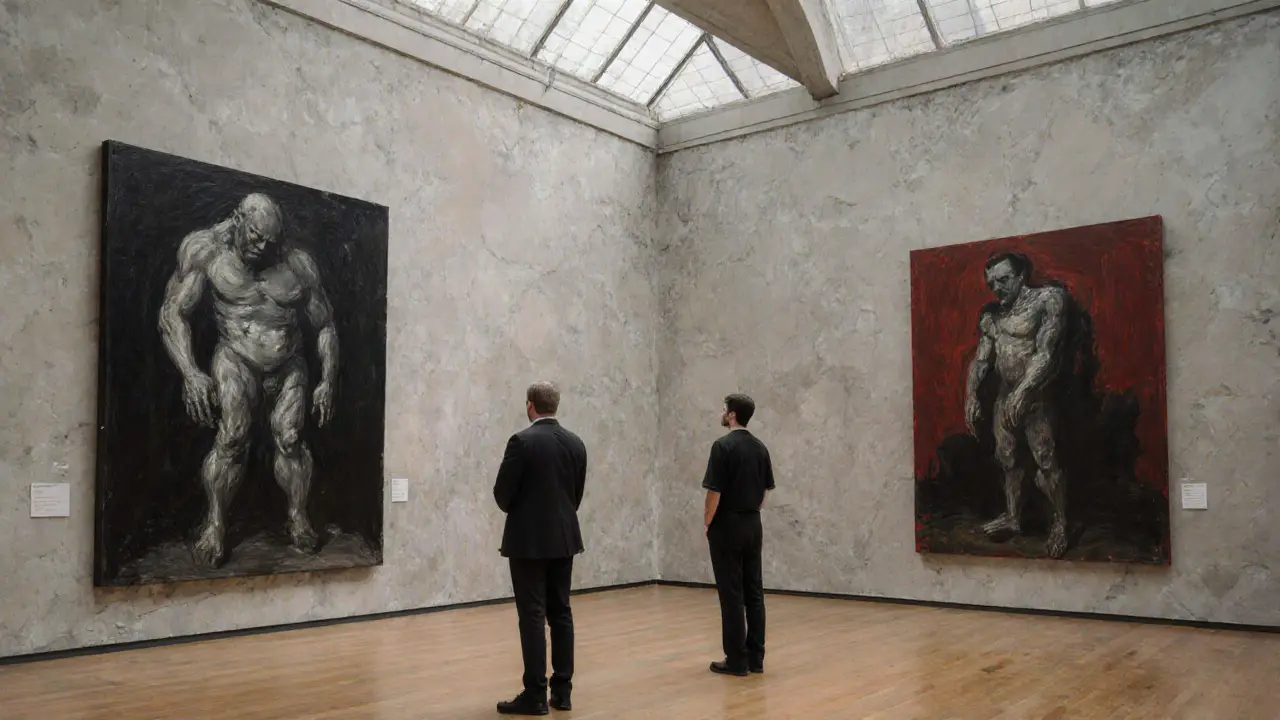
You think Munich is just about beer halls and lederhosen? Think again. Beneath the surface of its centuries-old tradition lies a quietly bold side-erotic art that’s been shaping German culture for over a century. This isn’t about strip clubs or late-night shows. It’s about museums, galleries, and intimate spaces where the human form is explored with honesty, history, and sometimes, provocation. If you’ve ever wondered what real erotic culture looks like in a city known for order and precision, you’re in the right place.
What Is Erotic Art-and Why Does It Matter in Munich?
Erotic art isn’t pornography. It’s not meant to arouse in a crude way. It’s about beauty, desire, vulnerability, and power. Think of it as the visual poetry of the body. In Munich, this tradition goes back to the 1800s, when artists like Franz von Stuck and Hans von Marées pushed boundaries by depicting nude figures not as idealized gods, but as real, breathing humans-with tension, emotion, and sensuality.
Munich’s stance on erotic art is unique. Unlike cities that hide it behind closed doors, Munich treats it as part of its cultural DNA. The city has no taboos around studying the human form, as long as it’s done with artistic intent. That’s why you’ll find erotic sculptures in the same museums as Renaissance paintings. It’s not a niche curiosity-it’s institutional.
Where to See Erotic Art in Munich
There are three key places where this art comes alive.
- Pinakothek der Moderne: This modern art museum has a permanent section dedicated to early 20th-century German expressionism. Look for works by Otto Dix and George Grosz-raw, unfiltered depictions of sexuality, war, and desire. Their pieces aren’t soft. They’re jagged, honest, and unforgettable.
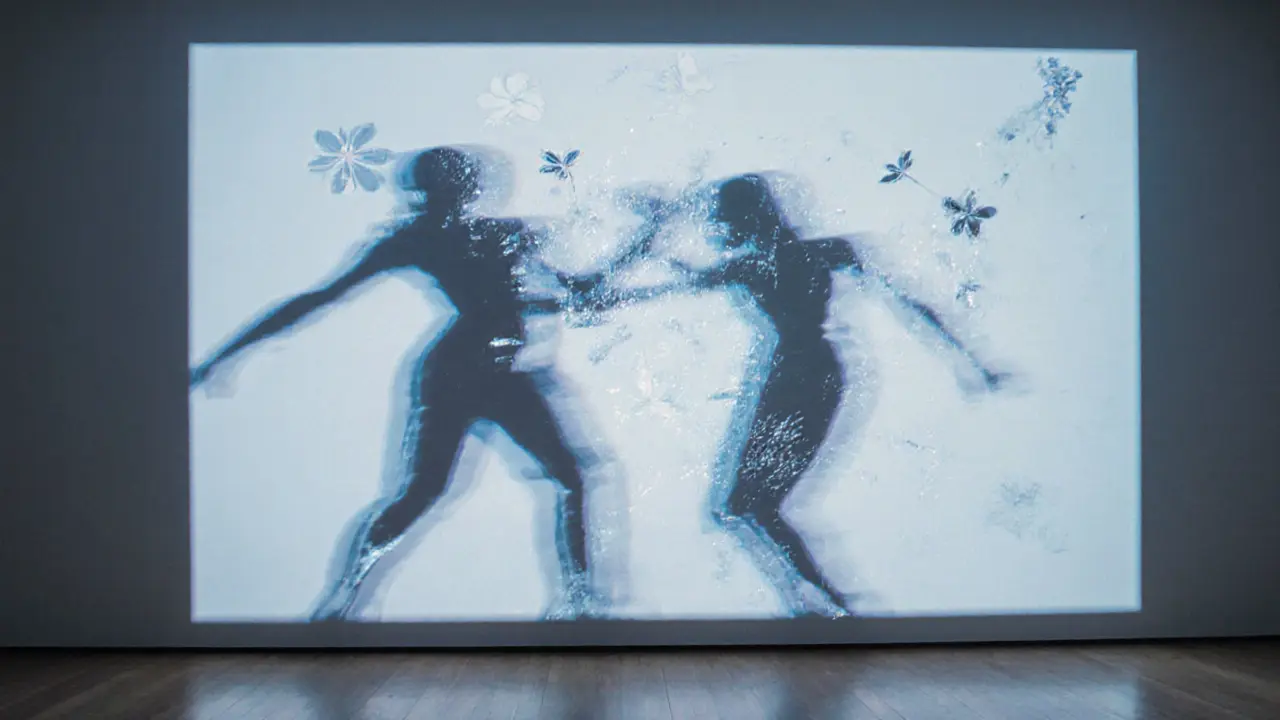
- Museum Brandhorst: While known for contemporary pop art, it occasionally hosts rotating exhibits on sexuality in modern media. In 2023, they featured a show called Body Politics, which included video installations by feminist artists challenging how female nudity is framed in art history.
- Staatliche Graphische Sammlung: This print collection holds over 500,000 works on paper. Among them? Hundreds of erotic etchings from the 1700s to the 1950s. You won’t find these on Google. You have to visit in person-and book a guided viewing. It’s the closest thing to a secret archive of German erotic imagery.
Pro tip: Don’t expect neon signs or ticket booths labeled “Erotic Art.” These pieces are integrated into broader collections. Ask a curator: “Where can I see works that explore the human body in a sensual or intimate context?” They’ll point you right there.
What to Expect When You Visit
There’s no shock value here. No strobe lights. No dancers. Just quiet rooms, soft lighting, and art that makes you pause. People who come here aren’t looking for thrills-they’re looking for meaning. You’ll see couples standing silently in front of a bronze sculpture, students sketching in notebooks, and older visitors whispering about how the same themes appeared in their grandparents’ time.
Some pieces are explicit. Others are subtle-a hand resting on a thigh, a glance across a room, a shadow falling just right. The power isn’t in what’s shown, but in what’s implied. That’s why this art lingers in your mind long after you leave.
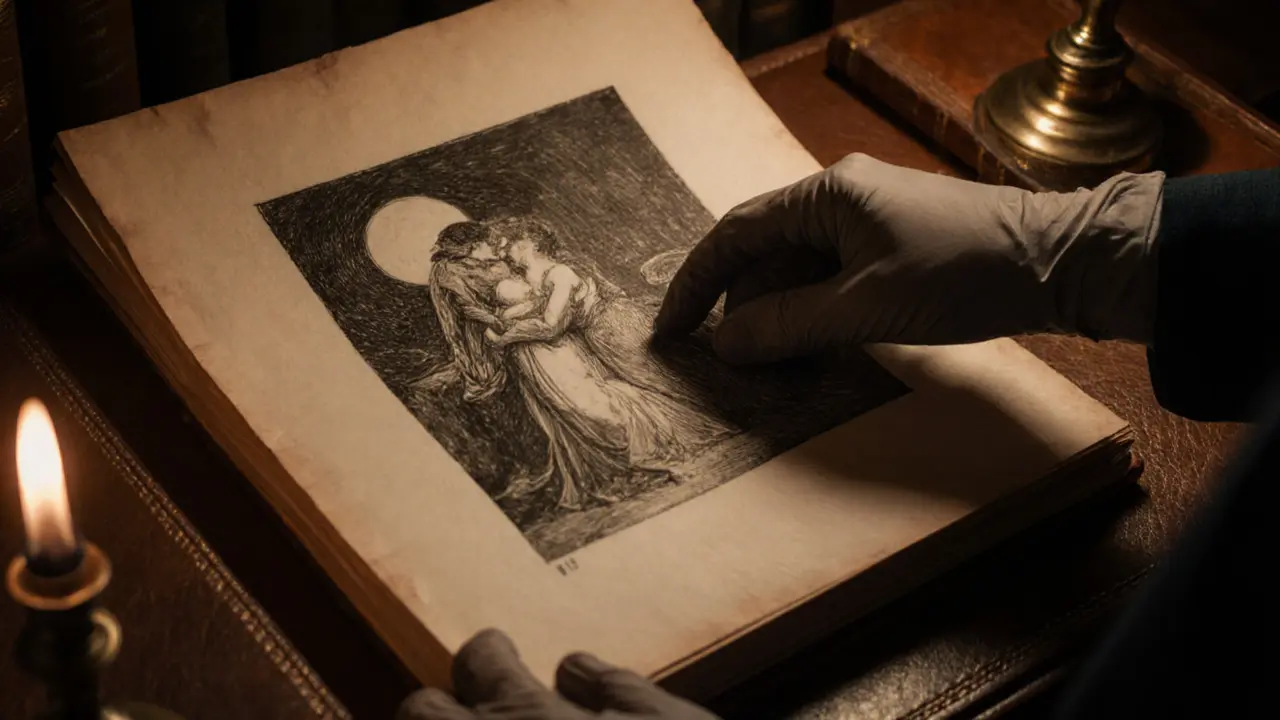
How to Plan Your Visit
Most of these museums are open Tuesday through Sunday, 10 a.m. to 6 p.m. Entry to Pinakothek der Moderne is €12, but if you buy the Munich Art Pass (€25 for 72 hours), you get access to all three plus discounts at cafes nearby. The Graphische Sammlung requires a reservation for erotic-themed viewings-book at least three days ahead via their website.
Go on a weekday if you want space to breathe. Weekends get crowded with school groups and tourists who don’t know what they’re looking at. Weekdays? You’ll often have entire rooms to yourself.
Why This Is Different from Other Cities
In Paris, erotic art is romanticized. In Amsterdam, it’s commercialized. In Munich, it’s studied. The city doesn’t market it as a tourist attraction. It doesn’t need to. Locals treat it like a library of human emotion. There’s no shame in looking. No pressure to react. Just quiet appreciation.
Compare this to Berlin, where erotic culture thrives in clubs and underground scenes. Munich’s version is quieter, deeper, and older. It’s not about what you do-it’s about what you see, and how it makes you think.
What to Avoid
Don’t expect to find “erotic tours” or guided walks labeled as such. There aren’t any. If someone offers one, they’re likely selling something else-adult entertainment, not art.
Also, avoid taking photos in the Pinakothek der Moderne’s erotic wing. It’s strictly forbidden. Not because it’s “indecent,” but because the lighting is delicate and the pieces are fragile. Respect the space. You’re not in a nightclub. You’re in a temple of thought.
Comparison: Erotic Art vs. Adult Entertainment in Munich
| Aspect | Erotic Art | Adult Entertainment |
|---|---|---|
| Location | Museums, galleries, private collections | Clubs, theaters, private venues |
| Primary Goal | Expression, history, emotion | Entertainment, arousal, performance |
| Public Perception | Respected, academic, culturally significant | Controversial, often hidden, regulated |
| Accessibility | Open to all ages with museum entry | Restricted to 18+, ID required |
| Price Range | €10-€25 museum entry | €30-€150 per show or service |
| Duration | Unlimited time to view | Fixed show times (30-90 mins) |
Frequently Asked Questions
Is erotic art legal in Munich?
Yes, absolutely. Germany has some of the most liberal laws in Europe around artistic expression. As long as the work is presented as art-not commercial pornography-it’s protected under free speech. Museums have been displaying erotic works since the 1890s without legal issues.
Can I bring my teenager to see erotic art in Munich?
Technically, yes. There’s no legal age restriction for museum visits. But most institutions advise parental discretion. Some pieces are intense-nudity, violence, or psychological themes. If you’re unsure, ask staff. They’ll tell you which rooms are suitable for younger viewers. Many families bring teens to learn about art history, not to shock them.
Are there any erotic art festivals in Munich?
Not in the way you might think. There’s no annual “Erotic Art Festival” like in some cities. But every two years, the Munich Art Biennale includes a curated section on sexuality and the body. It’s not advertised as “erotic”-it’s presented as contemporary art. That’s the Munich way: let the work speak, don’t label it.
Is there a difference between erotic art and pornography in German law?
Yes, and it’s critical. German law defines pornography as material created to sexually stimulate, often with explicit acts and no artistic context. Erotic art is judged by its intent: does it explore beauty, identity, or emotion? Courts have ruled that even graphic nudity can be art if it’s part of a larger narrative. That’s why museums are safe. Online porn sites? Not so much.
What if I’m not an art person? Will I still enjoy this?
You don’t need to know Picasso from Pollock. The best way to experience this is to walk in with an open mind. Ask yourself: What’s the mood here? What’s the body saying? How does the light fall? You don’t need to understand symbolism. You just need to feel something. That’s all it takes.
Final Thought: See Munich Through a Different Lens
Munich doesn’t shout its secrets. It lets them breathe. If you want to understand this city beyond Oktoberfest and castles, step into one of these quiet galleries. Let the art speak. You might find yourself thinking about desire, power, and beauty in ways you never expected. That’s the real gift of erotic culture here-it doesn’t entertain you. It changes you.

Rachel Kustarjo
Okay but have you SEEN the Otto Dix piece in the Pinakothek? The one where the woman’s eye is literally weeping gold leaf? I stood there for 20 minutes crying because I realized my entire concept of desire has been shaped by Instagram influencers and not actual human vulnerability. Munich doesn’t do ‘hot’-it does *haunting*. And I’m not even into art. I just like crying in museums.
Also, the curator who whispered ‘this was painted the year Hitler was born’? Chef’s kiss. I’m booking a flight next week just to stare at that one canvas again.
Sri Sundari
Wait. Did you just say ‘erotic art’ is protected under German law? Because I read somewhere that the Bavarian state has a secret clause in their cultural funding bill that bans any artwork depicting genitalia unless it’s ‘historically contextualized’-which is just code for ‘only if it’s old enough to be boring.’ And who decides what’s ‘contextualized’? The same people who banned the word ‘Schwul’ in schools in 1998? Something’s off here.
Also, why is there no mention of the 1972 police raid on the Staatliche Graphische Sammlung? The archives were sealed for 15 years. Coincidence? I think not.
Mark Black
Let’s deconstruct this ‘erotic art’ framework through a Foucauldian lens: the institutionalization of the erotic body as a normalized aesthetic is merely a neoliberal co-optation of transgressive desire. Munich doesn’t ‘respect’ eroticism-it commodifies it under the guise of ‘cultural heritage.’ The very act of labeling it ‘art’ sanitizes its subversive potential. It’s not about expression-it’s about control. The museum becomes a panopticon where desire is surveilled, cataloged, and rendered safe for middle-class consumption.
Meanwhile, Berlin’s underground clubs? Now *that’s* real resistance. Not some curator whispering about ‘lighting conditions’ while you stare at a 1920s etching of a woman’s thigh.
jeremy nossiter
You know… I’ve spent years thinking about how art becomes ‘acceptable’-how society draws this invisible line between ‘beautiful’ and ‘obscene’-and I think it’s not about the body at all, it’s about the gaze. Who’s looking? Who’s allowed to look? And who gets to decide if the look is ‘artistic’ or ‘indecent’? In Munich, the gaze is quiet, almost reverent, like you’re in a cathedral… but it’s still a gaze. And that’s the problem. Even when it’s ‘respectful,’ it’s still objectifying. The body is still on display. The only difference is the velvet rope instead of the neon sign.
And yet… I still went. I still stood there. And I still felt something. So maybe the line isn’t meant to be crossed… maybe it’s meant to be lingered on.
Also, ‘graphische sammlung’ is spelled wrong in the post. It’s ‘Sammlung,’ not ‘Sammlung.’ Just saying.
Mariam Mosallam
So… you’re telling me this is ‘culture’ and not just rich people pretending they’re deep because they didn’t get laid in college? Cute. I went to the Louvre once and cried in front of the Venus de Milo. Turns out I just really like statues with no arms. Same energy.
Also, ‘ask the curator’? Bro. I don’t want to whisper to a stranger in a museum like I’m confessing a sin. Just put a sign up. ‘Here be naked people who are also art.’
Dan Garcia
Hey-if you’re even slightly curious about this stuff, just go. Don’t overthink it. Don’t worry if you ‘get it.’ You don’t have to be an art student. You don’t need to know the history of German expressionism. Just walk in. Look. Feel. If something makes you pause-even for a second-that’s enough. The art doesn’t need your approval. It’s already speaking.
And if you’re bringing a teen? That’s awesome. Not because it’s ‘educational,’ but because it’s real. Bodies, desire, emotion-they’re not taboos. They’re part of being human. And Munich? It’s one of the few places that lets you sit with that quietly, without judgment.
Also, the Munich Art Pass? Totally worth it. You’ll thank me later.
Éloïse Dallaire-Gauthier
As a Canadian who’s lived in Munich for 12 years, I’ve watched this city turn its own soul into a postcard-and then pretend it’s always been this way. Yes, the art is powerful. Yes, the history is rich. But let’s not pretend this is some pure, untainted cultural tradition. The same institutions that display these works quietly removed 37 pieces from public view in 2017 after complaints from conservative religious groups. They were ‘temporarily relocated.’
And yes, I know what you’re thinking-‘But they’re back now!’-but they’re not in the main galleries. They’re in the basement, behind a locked door, with a ‘request to view’ form. That’s not reverence. That’s compromise.
So go. See the art. But don’t romanticize the silence. That silence? It’s not peace. It’s negotiation.
Derren Spernol
I went last month. Just wandered in on a Tuesday afternoon. No one else there. Sat in front of that one George Grosz drawing-the one with the guy holding a clock and a knife-and just… didn’t move for an hour. Didn’t take a photo. Didn’t post it. Didn’t even think about it after I left.
But then, three days later, I found myself staring at my own hand while making coffee. Wondering how long it’s been since I just… looked at something without trying to understand it.
That’s what this place does. Doesn’t shout. Doesn’t sell. Just… waits. And somehow, that’s the loudest thing I’ve ever heard.