
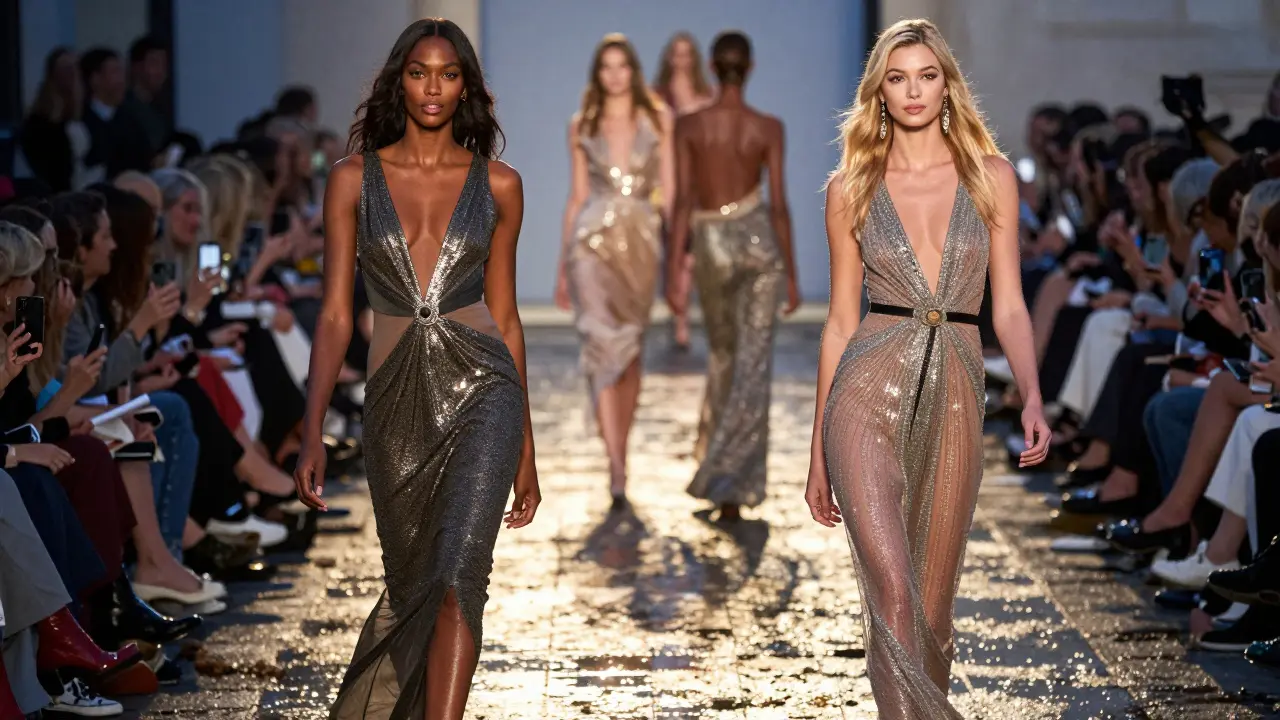
You’ve seen them on billboards, magazine covers, and opening shows in Milan and New York. Their faces are everywhere-sometimes more recognizable than the brands they wear. But who are supermodels, really? And why, in an age of influencers and TikTok stars, do they still command the world’s attention?
What Exactly Is a Supermodel?
A supermodel isn’t just a tall woman who walks down a runway. A supermodel is someone who breaks out of the fashion world and becomes a global icon. They don’t just wear clothes-they define trends, shape beauty standards, and land deals with brands far beyond fashion. Think of them as the original celebrities of style.
The term exploded in the late 1980s and early 1990s, when a handful of women-Naomi Campbell, Cindy Crawford, Linda Evangelista, Claudia Schiffer, and Kate Moss-became household names. These weren’t just models. They had contracts with Pepsi, appeared on the cover of Vogue multiple times a year, and earned millions per campaign. Linda Evangelista famously said, "We don’t wake up for less than $10,000 a day." That wasn’t bragging-it was the new normal.
Today, the definition has expanded. Supermodels still walk for Chanel and Valentino, but they also launch skincare lines, star in Netflix documentaries, and build empires on Instagram. The difference between a model and a supermodel? Supermodels own their brand. They’re not hired for a look-they’re hired because they’ve become a symbol.
Why Supermodels Still Matter in 2026
You might think social media killed the supermodel. After all, anyone with 100K followers can call themselves a "model." But here’s the truth: supermodels still dominate the highest-paying, most visible jobs in fashion.
When Victoria’s Secret wants to relaunch, they don’t pick a TikTok dancer. They bring back Naomi Campbell. When Louis Vuitton launches a new handbag, they don’t use an influencer with 500K followers-they hire Gigi Hadid or Bella Hadid, who have over 50 million combined followers and still command runway attention.
Why? Because supermodels bring credibility. They’ve been vetted by decades of top designers, editors, and photographers. Their faces are trusted. A brand doesn’t just pay for a photo shoot-they pay for legacy.
And let’s not forget the money. In 2025, the top 5 supermodels earned an average of $12 million each. That’s more than most Hollywood leads. Gigi Hadid reportedly made $9.5 million in 2024 just from brand deals. Karlie Kloss turned her modeling career into a coding education nonprofit for girls. These aren’t just faces-they’re CEOs.
The Evolution of the Supermodel
The supermodel of the 1990s looked very different from today’s. Back then, it was all about the "look"-tall, thin, icy, and flawless. Cindy Crawford had a mole. Naomi Campbell had curves. But they were still expected to fit a narrow mold.
Today’s supermodels are breaking those rules. Ashley Graham, a size 14, has walked for Rihanna’s Savage X Fenty and appeared on the cover of Sports Illustrated. Paloma Elsesser, who identifies as plus-size and queer, has opened shows for Prada and Dior. And let’s not forget Adwoa Aboah, who uses her platform to talk about mental health.
The industry is changing. Supermodels now aren’t just beautiful-they’re voices. They speak out on diversity, sustainability, and ethics. They’re not just selling jeans-they’re selling a message. And consumers are listening.

How Supermodels Are Made (And Why It’s Harder Than Ever)
It used to be simple: get scouted at a mall, move to New York, sign with IMG or Elite, and boom-you’re a supermodel.
Now? It’s a marathon. Agencies still scout, but they also look at Instagram analytics. A model needs a unique look, strong engagement, and a personal brand. They need to know how to pose for a selfie, write a caption, and manage a publicist.
And the competition? It’s brutal. Thousands of aspiring models post daily. Only a handful get noticed. Even then, breaking into the top tier requires more than looks. You need resilience. You need to handle rejection. You need to stay true to yourself when the industry tries to change you.
Take Kaia Gerber. She’s Cindy Crawford’s daughter. She didn’t just ride her mom’s coattails-she worked her way up. At 16, she walked 40+ shows in one season. She didn’t just pose-she studied the craft. That’s what separates the supermodels from the rest.
Supermodels vs. Influencers: What’s the Real Difference?
| Aspect | Supermodel | Influencer |
|---|---|---|
| Primary Platform | Runways, print magazines, high-end campaigns | Instagram, TikTok, YouTube |
| Agency Representation | Yes-top agencies like IMG, Ford, Women | Often self-managed or with small talent firms |
| Brand Partnerships | Luxury fashion, cosmetics, jewelry (Chanel, Dior, L’Oréal) | Beauty, fashion, lifestyle, supplements |
| Earnings (Top Tier) | $8M-$20M/year | $1M-$10M/year (rarely over $15M) |
| Longevity | Decades (Cindy Crawford still works at 58) | Often 1-5 years before fading |
| Industry Credibility | Backed by designers, editors, decades of history | Backed by follower count and engagement metrics |
The key difference? Supermodels are chosen by the industry. Influencers are chosen by the audience. One is built on legacy. The other is built on virality.
Where Supermodels Are Today
They’re not just in Paris or Milan anymore. Supermodels are everywhere. You’ll find them in Vancouver, where Gigi Hadid shot a campaign for a Canadian ski brand last winter. You’ll see them in Lagos, where Naomi Campbell launched a fashion incubator for African designers. You’ll hear them on podcasts, talking about body image and mental health.
Many are shifting into behind-the-scenes roles. Karolina Kurkova runs a production company. Christy Turlington founded a maternal health nonprofit. These women aren’t retiring-they’re evolving.
And the next generation? Look at Rianne van Rompaey, who’s now a director. Or Adut Akech, who’s launching her own clothing line. Supermodels aren’t disappearing. They’re becoming creators.
What You Can Learn From Supermodels
Even if you’ll never walk a runway, there’s something to learn from how supermodels operate:
- Own your brand. Supermodels don’t wait for someone to tell them who they are. They define it themselves.
- Be consistent. They don’t disappear for years. They show up, year after year.
- Adapt without losing yourself. They’ve changed with the times-but never lost their core identity.
- Use your voice. The best supermodels today aren’t silent. They speak up.
That’s not just fashion advice. That’s life advice.
Frequently Asked Questions
Who was the first supermodel?
While the term "supermodel" became popular in the 1980s, many credit Twiggy in the 1960s as the first true supermodel. She was the first model to earn over $100,000 a year, appeared on magazine covers worldwide, and became a global celebrity-something no model had done before. She didn’t just wear clothes; she became a cultural phenomenon.
Are supermodels still relevant today?
Absolutely. While influencers dominate social media, supermodels still land the biggest campaigns, walk the most prestigious runways, and earn the highest paychecks in fashion. Brands like Chanel, Gucci, and Estée Lauder still rely on supermodels to convey luxury and trust. Their influence extends beyond ads-they shape trends, set beauty standards, and lead conversations on diversity and sustainability.
Can anyone become a supermodel?
It’s not impossible, but it’s extremely rare. Today’s supermodels aren’t just chosen for their looks-they’re chosen for their work ethic, brand potential, and ability to connect with audiences. You need talent, timing, resilience, and often, a unique story. Many top models today also have degrees, speak multiple languages, or run businesses. It’s not just about being photogenic-it’s about being strategic.
How much do supermodels make?
Top supermodels earn between $8 million and $20 million per year. Gigi Hadid made $9.5 million in 2024, while Kate Moss earns an estimated $10 million annually from brand deals alone. Their income comes from runway shows, magazine covers, advertising campaigns, and licensing deals. Many also launch their own products-skincare, clothing, or books-which add millions more.
Do supermodels have a shelf life?
Not like you might think. While modeling careers used to end in the late 20s, today’s supermodels often work into their 40s and 50s. Cindy Crawford is still modeling at 58. Naomi Campbell walks runways regularly in her late 40s. The key? Staying relevant by evolving-launching businesses, speaking on social issues, or becoming mentors. Their longevity comes from building more than just a face-they build legacies.



Andrew Chen
Supermodels still matter because they represent a level of craftsmanship and discipline that influencers simply can't replicate. It's not just about looks-it's about consistency, professionalism, and decades of industry validation.
Farrah Kennedy
Oh please. You call that a legacy? Cindy Crawford’s mole was a marketing gimmick dressed up as rebellion. Today’s supermodels are just corporate mascots with better PR teams and higher IQs than the influencers they’re paid to bury. They don’t speak for diversity-they monetize it. And don’t get me started on how Karlie Kloss turned ‘coding for girls’ into a tax-deductible vanity project. 🙄
Alek Mercer
It is truly remarkable to observe how the evolution of the supermodel reflects broader societal shifts toward authenticity, resilience, and purpose-driven leadership. The transition from passive icon to active advocate is not merely a trend-it is a meaningful redefinition of influence in the modern age. One cannot help but admire the discipline, vision, and moral courage demonstrated by those who leverage their platforms for enduring change.
William Dean
lol u think gigi hadid is a supermodel? she got scouted by her mom’s ex’s friend’s cousin. the whole thing’s a scam. agencies don’t scout anymore-they buy instagram followers and pay influencers to say ‘i’m a model’ 500 times. and don’t even get me started on how ‘plus size’ is just the new skinny. same bs, diff filter. #fashionisdead
Mark Sullivan
Let’s be real-this whole supermodel narrative is a controlled distraction. The fashion industry uses them to distract you from the fact that 98% of models are underpaid, exploited, and pressured into eating disorders. The ‘legacy’ they talk about? It’s a smoke screen for systemic abuse. And now they’re selling ‘empowerment’ like it’s a lipstick shade. Wake up. This isn’t inspiration-it’s exploitation with a PR budget.