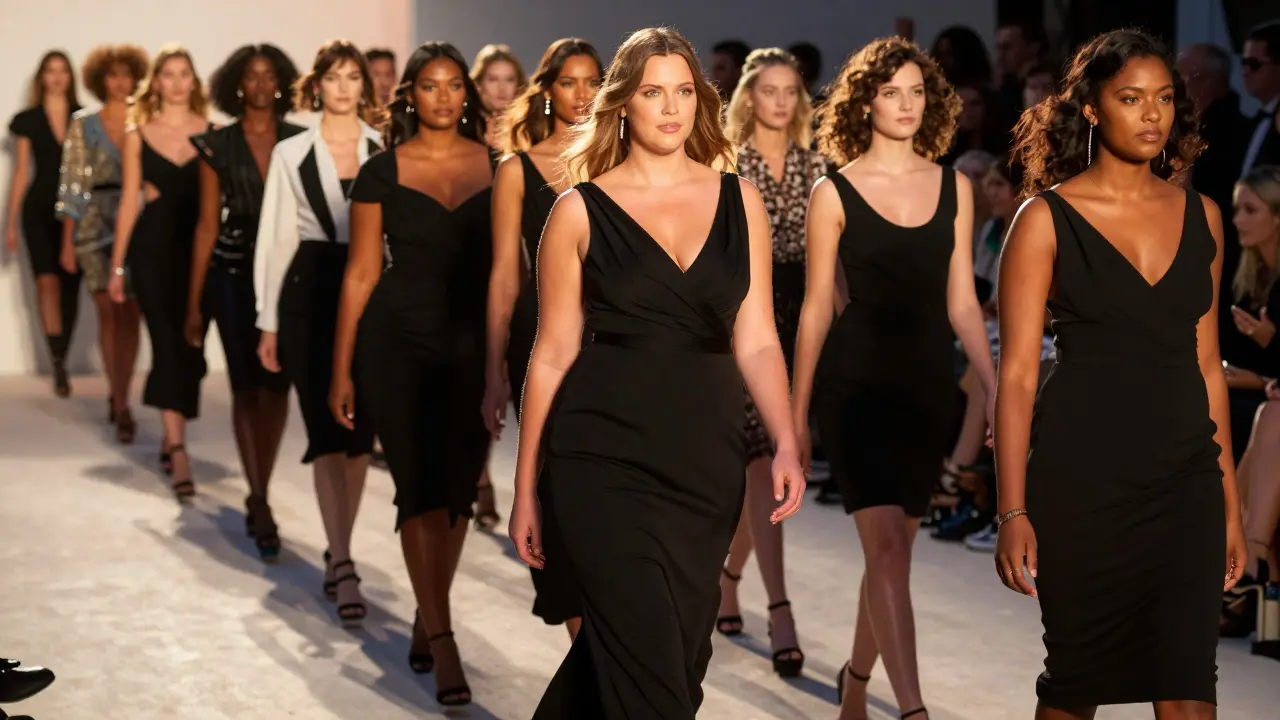
You’ve seen them on runways, in magazine spreads, and on Instagram feeds-curvy models who aren’t just breaking rules, they’re rewriting the entire playbook of what fashion looks like. Gone are the days when size zero was the only acceptable standard. Today, curves aren’t an exception-they’re the norm. And it’s not just about looks. It’s about power, representation, and finally seeing people who look like you on the covers of Vogue and in ads for major brands.
Remember when you’d flip through a fashion magazine and feel like none of the models looked anything like you? You weren’t alone. For decades, the industry pushed a single, narrow ideal: thin, tall, and unattainable. But something shifted. Women started speaking up. Brands started listening. And curvy models didn’t just ask for a seat at the table-they built their own table.
What Exactly Is a Curvy Model?
A curvy model isn’t just someone who’s ‘bigger’ than a sample size. She’s a woman with a body type that falls between sizes 12 and 22 in the U.S. (or 16-26 in the UK), with defined hips, waist, and bust-real proportions that reflect how most women actually look. These models aren’t airbrushed illusions. They’re real people with stretch marks, cellulite, and natural curves. And they’re not just modeling clothes-they’re modeling confidence.
Brands like Savage X Fenty, Aerie, and Universal Standard didn’t just hire curvy models-they built entire campaigns around them. Rihanna didn’t just launch a lingerie line; she launched a movement. She didn’t cast models who fit the mold-she cast women who *were* the mold. That’s the difference.
Why Curvy Models Are Changing Fashion
It’s not just about inclusivity. It’s about business. Studies show that 67% of women in the U.S. wear a size 14 or above. Yet, until recently, less than 5% of fashion ads featured plus-size models. That’s a massive disconnect between who’s buying and who’s being shown.
When brands finally started using curvy models, sales went up. A 2023 report by McKinsey found that brands with diverse model representation saw a 15% increase in customer engagement and a 9% boost in sales within six months. It wasn’t a fluke. It was proof that when you show real people, real people buy.
And it’s not just about money. It’s about mental health. A 2024 study from the University of California found that young women who regularly saw curvy models in media reported 30% higher body satisfaction than those who only saw thin models. Seeing yourself reflected in fashion doesn’t just feel good-it changes how you feel about yourself.
The Rise of Curvy Models: Key Players Who Made History
Let’s talk about the women who turned the tide. Ashley Graham wasn’t just the first plus-size model on the cover of Vogue-she became the face of a new era. Then there’s Tess Holliday, who smashed the industry’s definition of ‘model’ with her unapologetic presence and viral social media posts. Her message? ‘I’m not a trend. I’m a movement.’
And it’s not just American names. In Europe, models like Paloma Elsesser and Harnaam Kaur are redefining beauty on global runways. Paloma, who’s worked with Gucci and Prada, doesn’t just walk the runway-she owns it. Harnaam, who has facial hair due to PCOS, models for L’Oréal and speaks out about intersectional beauty. These women aren’t just models. They’re pioneers.
Even traditional luxury houses are catching on. Chanel, Burberry, and Dolce & Gabbana have all featured curvy models in recent campaigns. It’s no longer a niche experiment-it’s becoming standard.
How the Industry Still Falls Short
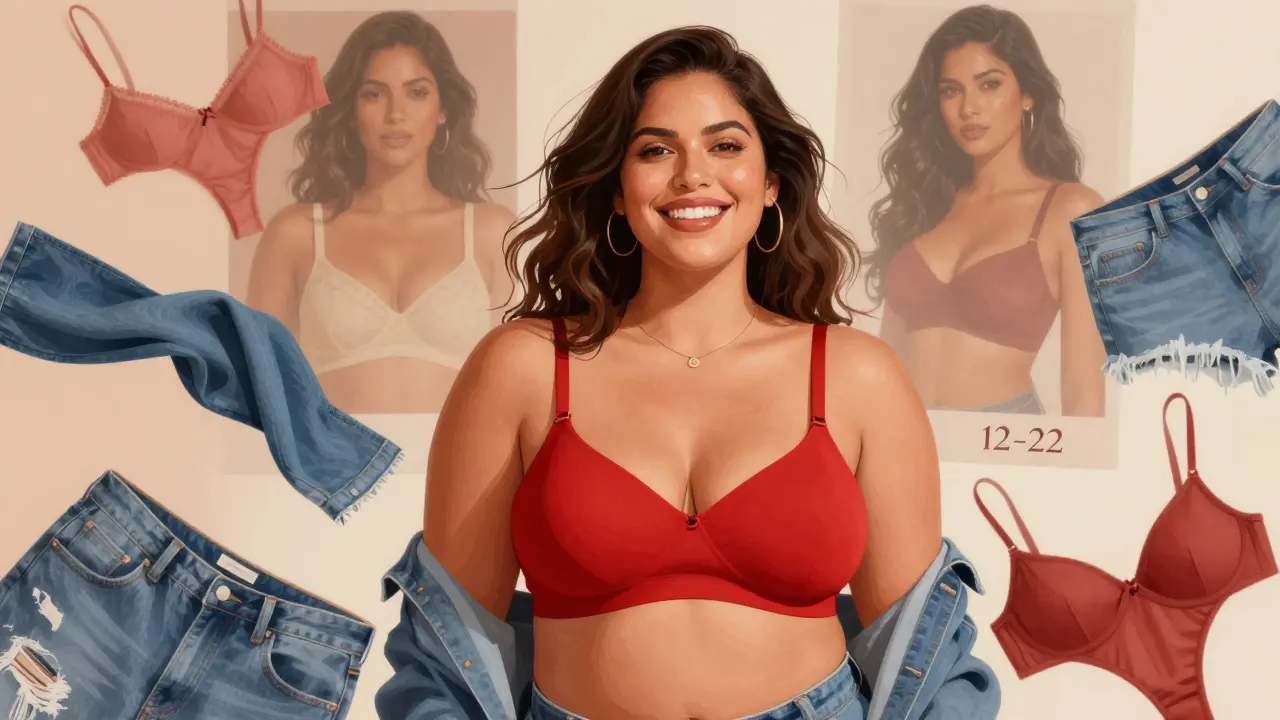
Don’t get it twisted-progress isn’t perfect. Many brands still only feature curvy models in ‘plus-size’ sections, not alongside straight-size models in main campaigns. Some still use digital stretching to make clothes look like they fit, which defeats the whole point.
And the sizing? Still a mess. A size 14 at one brand might be a size 18 at another. No standard. No consistency. That’s why many curvy women still struggle to find clothes that fit, even when the models in the ads look like them.
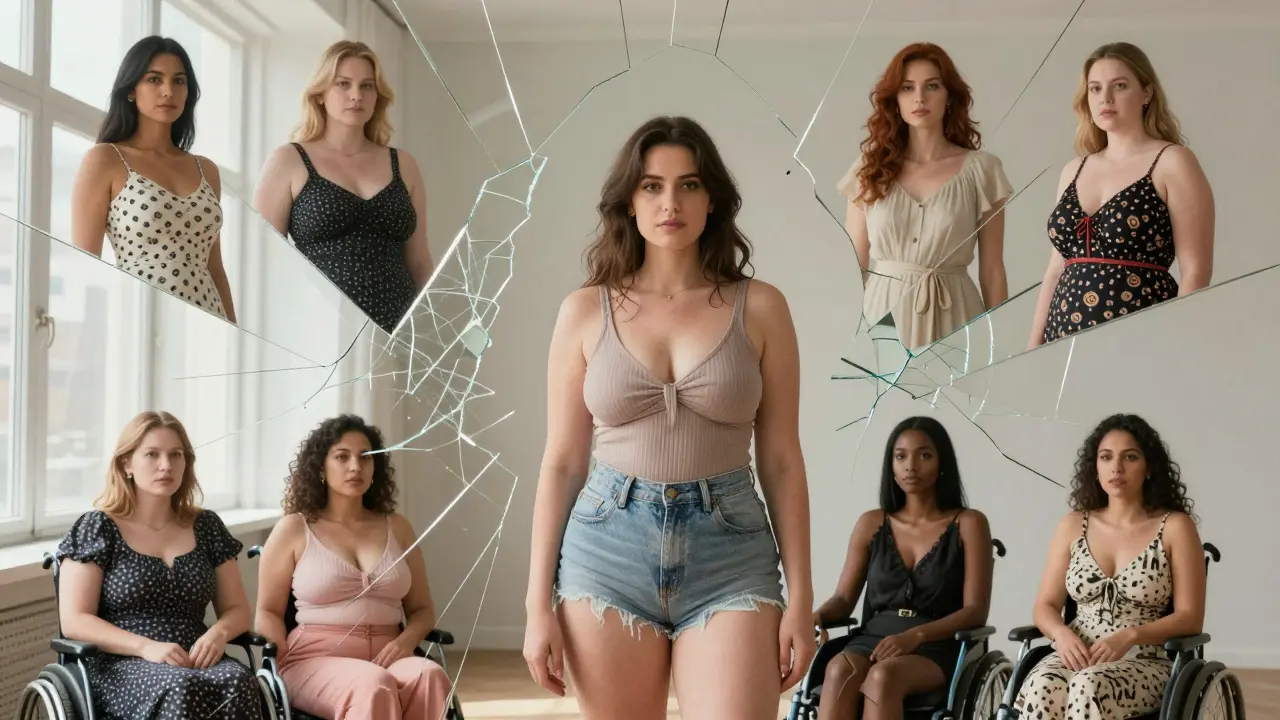
There’s also a lack of diversity within diversity. Most curvy models still fit a very specific look: tall, light-skinned, with hourglass figures. Black, Indigenous, disabled, and trans curvy models are still underrepresented. The revolution isn’t over-it’s just getting started.
What You Can Expect to See Next
Expect to see more brands doing away with ‘straight’ and ‘plus’ labels entirely. More retailers are merging their size ranges into one seamless collection. Zara, H&M, and ASOS are already testing this. No more separate sections. Just clothes-for all bodies.
Runways are getting wider. Literally. Designers are now creating garments on a range of body types during fittings, not just on one sample size. That means better fits, better comfort, and better quality for everyone.
And social media? It’s still the biggest force for change. TikTok and Instagram have turned everyday women into influencers who call out brands for excluding their size. And brands are responding. When you tag a company with #SizeInclusive or #RealBodies, they notice.
Where to Find Curvy Models in Action
If you want to see the revolution in real time, follow these accounts:
- Ashley Graham - The pioneer who broke the Vogue barrier
- Tess Holliday - The voice of unapologetic body positivity
- Paloma Elsesser - The runway queen redefining luxury fashion
- Harnaam Kaur - Challenging beauty norms with grace and grit
- Julie Guichard - French curvy model with a global following
Look at campaigns from Savage X Fenty, Eileen Fisher, and Girlfriend Collective. These brands don’t just feature curvy models-they center them. Their ads don’t say ‘plus-size.’ They say, ‘This is fashion.’
How to Support the Movement
You don’t need to be a model to be part of this change. Here’s how you can help:
- Buy from brands that feature real bodies-not just airbrushed ones
- Call out brands that exclude curvy models in comments or DMs
- Share photos of curvy models you love-tag the brands
- Don’t say ‘I wish I looked like that.’ Say, ‘I wish fashion looked like this.’
Every time you choose a brand that celebrates diversity, you’re voting with your wallet. And that’s more powerful than any protest sign.
Final Thought: This Isn’t Just About Clothes
Curvy models aren’t just selling jeans or bras. They’re selling the idea that your body isn’t a problem to fix. That you don’t need to shrink to be seen. That beauty isn’t one-size-fits-all.
When a 16-year-old girl sees a curvy model on a billboard and thinks, ‘She looks like me,’ that’s not just marketing. That’s healing.
The fashion revolution didn’t start with a designer. It started with a woman who looked in the mirror and refused to apologize for her curves.
Are curvy models only for lingerie and casual wear?
No. While curvy models were once limited to ‘plus’ categories, they now walk runways for high fashion houses like Chanel and Gucci, star in luxury ad campaigns for brands like L’Oréal and Calvin Klein, and appear in editorial spreads for Vogue and Harper’s Bazaar. The industry is moving away from segregating sizes-curvy models are now part of mainstream fashion across all categories.
Do curvy models earn less than straight-size models?
Historically, yes. Curvy models often earned 30-50% less than their straight-size counterparts, even with similar experience. But that gap is shrinking fast. Top curvy models like Ashley Graham and Paloma Elsesser now command rates on par with top straight-size models, especially when they have strong brand partnerships or social media followings. The industry is catching up to the fact that representation drives revenue.
Why do some brands still use digital stretching?
Digital stretching is used to make clothing appear to fit curvier bodies without actually producing the garments in those sizes. It’s cheaper and faster-but it’s deceptive. It tells consumers the clothes will fit them, when they won’t. More brands are ditching this practice because customers are calling it out, and lawsuits are starting to happen. Transparency is now a competitive advantage.
Is the curvy model movement only happening in the U.S.?
No. The movement is global. In Europe, models like Julie Guichard and Jourdan Dunn are leading the charge. In Australia, brands like David Jones feature curvy models in all their campaigns. In Asia, countries like Japan and South Korea are slowly opening up, with brands like Uniqlo and Zara introducing size-inclusive lines. The conversation is happening everywhere-just at different speeds.
Can a woman become a curvy model without professional experience?
Absolutely. Many curvy models today started on Instagram or TikTok. Brands are scouting real people, not just agency-trained models. If you have confidence, authenticity, and a strong personal style, you can get noticed. Agencies like Wilhelmina and IMG now have dedicated plus-size divisions, and many hold open calls specifically for curvy women. You don’t need to be a size 0-you just need to be you.