
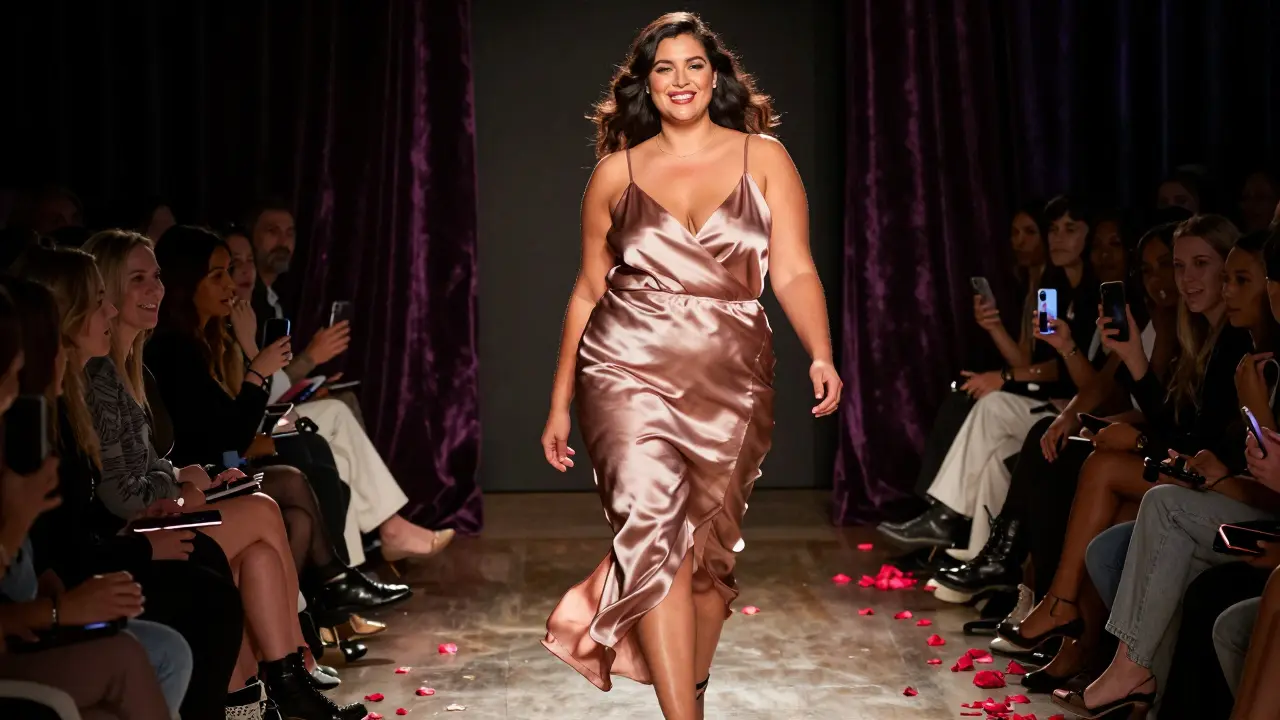
You’ve seen them. Not just in magazines or on Instagram, but on real runways in New York, Paris, and Milan-women with curves, strong thighs, full hips, and unapologetic presence. They don’t walk to fit a mold. They walk to break it. And the fashion world? It’s finally catching up.
What Curvy Models Really Mean Today
Curvy models aren’t just a trend. They’re a movement. For decades, fashion ran on one narrow standard: tall, thin, and angular. But in the last ten years, that’s changed. Brands like Savage X Fenty, Aerie, and Universal Standard started casting models who actually look like their customers. Not because it was trendy, but because it made sense. Real women don’t all fit into a size 0. And the runway? It started to reflect that.
Today, a curvy model is typically defined as someone who wears a size 12 or higher in the U.S., or a size 16+ in the UK. But it’s not just about numbers. It’s about presence. These models bring energy, confidence, and authenticity to every step. They don’t need to shrink to be beautiful. They are beautiful because they own their bodies.
Why This Matters Beyond the Catwalk
Think about the last time you saw a girl your size on a billboard. How did it feel? For many, it was the first time they saw someone who looked like them in a space that always said, “You don’t belong here.” That’s powerful.
Studies from the Dove Self-Esteem Project show that 70% of girls feel pressured to look a certain way by media images. When curvy models appear on runways and in ads, it sends a quiet but loud message: your body is valid. It’s not about promoting any one body type-it’s about expanding the definition of beauty so no one feels excluded.
And it’s working. Teenagers are posting selfies with captions like “I’m not a trend-I’m a model.” Brands are seeing higher sales when they feature diverse bodies. Fashion isn’t just about clothes anymore. It’s about identity.
Who Are the Big Names in Curvy Modeling Right Now?
Some names you should know:
- Lizzo-yes, she’s a singer, but she’s also walked for Lane Bryant and Savage X Fenty. Her confidence is contagious.
- Paloma Elsesser-a favorite of Marc Jacobs and Fenty. She’s opened and closed major shows with quiet power.
- Jasmine Sanders-known for her bold walk and work with Nike, Adidas, and H&M.
- Robyn Lawley-one of the first plus-size models to appear in Vogue Australia and Harper’s Bazaar.
- Iskra Lawrence-activist, model, and founder of a body-positive brand. She doesn’t just walk the runway-she changes it.
These women didn’t wait for permission. They walked in anyway.
How Curvy Models Are Changing the Industry
It’s not just about casting. It’s about design. When brands hire curvy models, they have to make clothes that fit them. That means wider hips, fuller busts, longer torsos. Suddenly, seamstress teams are rethinking patterns. Tailors are adjusting darts. Fabric stretch is being tested differently.
Before, many brands would just “scale up” a size 4 pattern. That doesn’t work. Bodies don’t grow evenly. A size 16 isn’t a size 4 with extra fabric-it’s a different shape. And now, designers are learning that.
Companies like Chromat and Universal Standard now design for 12 different body types. They measure waist-to-hip ratios, bust depth, thigh circumference-not just weight. That’s real innovation.
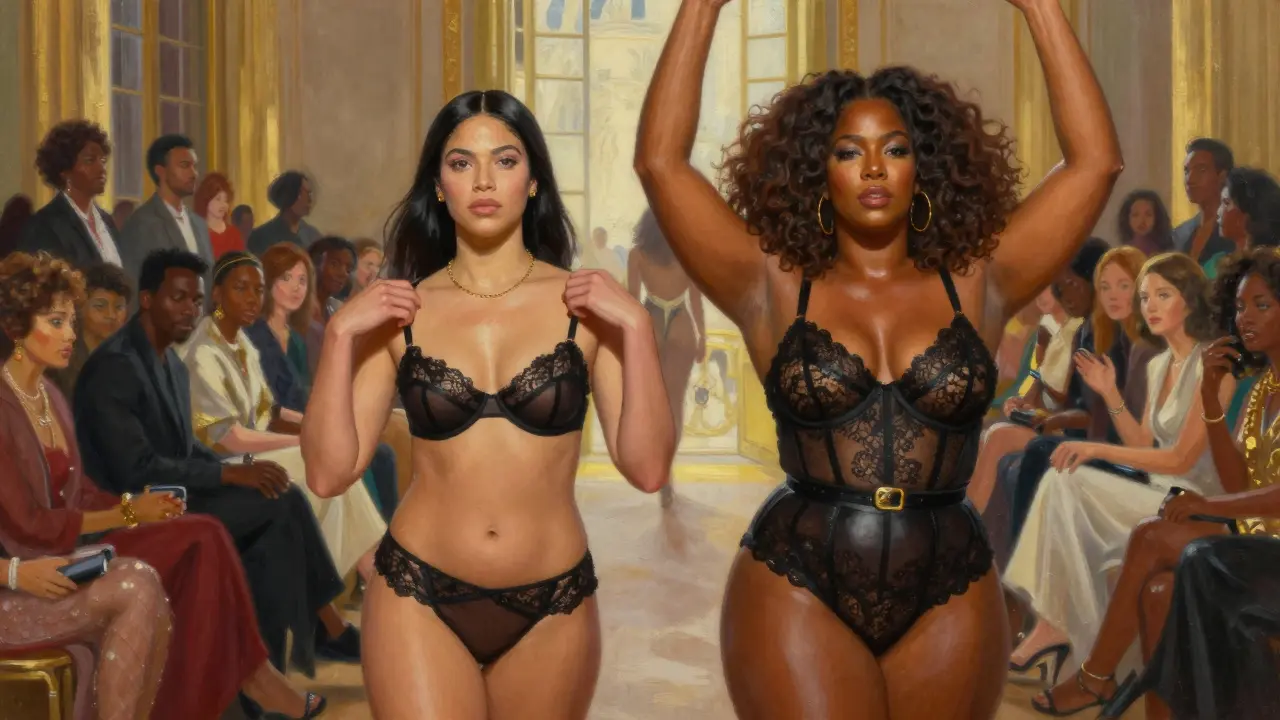
What It Takes to Be a Curvy Model Today
It’s not just about being plus size. It’s about having presence. Agencies like IMG Models and Wilhelmina now have dedicated curvy divisions. They look for:
- Strong walk-confidence isn’t optional. It’s required.
- Face and personality-brands want authenticity, not just measurements.
- Consistency-this isn’t a one-show gig. You need to be bookable for campaigns, editorials, and runway shows.
- Self-advocacy-many curvy models speak up about sizing, inclusivity, and fair pay.
And yes, the pay gap still exists. A curvy model might earn 30-40% less than a straight-size model for the same job. But that’s changing. More contracts now include clauses for equal pay. More models are unionizing. More clients are listening.
Where You Can See Curvy Models Today
You don’t need to fly to Paris. Look closer:
- Savage X Fenty-every show features body diversity. No filters. No airbrushing.
- ASOS Curve-one of the biggest online retailers to feature curvy models in 90% of their campaigns.
- Nordstrom-started a dedicated plus-size runway at their annual fashion show.
- Amazon Fashion-now features curvy models in 80% of their new apparel ads.
- Instagram-follow hashtags like #CurvyModel, #PlusSizeFashion, #BodyPositivity. You’ll find thousands of real women building communities.
The runway isn’t the only stage anymore. Social media is where the real change is happening.
What’s Still Missing?
Progress isn’t perfect. Curvy models are still underrepresented in luxury fashion. High-end houses like Chanel or Dior rarely cast them. And even when they do, it’s often tokenism-just one model in a sea of thin ones.
Also, most curvy models are still white or light-skinned. Black, Latina, Asian, and Indigenous curvy models are still fighting for visibility. The movement needs to get deeper, wider, and more inclusive.
But the door is open. And more women are walking through it every day.
How You Can Support the Movement
You don’t have to be a model to be part of this. Here’s how:
- Follow curvy models on Instagram. Like their posts. Comment. Share.
- Buy from brands that feature diverse models. Your wallet speaks louder than your words.
- Call out brands that still use only thin models. Tag them. Ask why.
- Don’t say “I wish I looked like her.” Say, “I love how she owns her body.”
- Teach the girls in your life that beauty isn’t a size. It’s a spirit.
Change doesn’t start on the runway. It starts in your feed, your cart, your conversation.
Curvy Models vs. Traditional Models: A Quick Comparison
| Feature | Curvy Models | Traditional Models |
|---|---|---|
| Typical Size Range | US 12-24 / UK 16-28 | US 0-8 / UK 4-12 |
| Body Shape | Curves, fuller hips, natural proportions | Straight, linear, narrow frame |
| Brand Partnerships | Savage X Fenty, Aerie, ASOS, Universal Standard | Chanel, Dior, Gucci, Versace |
| Media Representation | Increasing on social media and fast fashion | Still dominant in high fashion magazines |
| Pay Equity | Still 30-40% lower on average | Higher baseline, but narrowing gap |
| Public Perception | Seen as authentic, relatable, empowering | Seen as aspirational, but often unattainable |
Frequently Asked Questions
Are curvy models really changing fashion, or is it just a passing trend?
It’s not a trend. It’s a correction. For decades, fashion ignored 70% of the population. Now, brands are realizing that selling to more people means selling more. Curvy models aren’t a fad-they’re the new normal. Sales data from companies like ASOS and Savage X Fenty prove it: inclusive sizing drives revenue. The market is speaking, and fashion is listening.
Can anyone become a curvy model?
There’s no single formula. Agencies look for confidence, walk, personality, and consistency-not just size. If you have a strong presence, know how to carry yourself in front of a camera, and can show up professionally, you have a shot. Many curvy models started with Instagram, got noticed, and built their careers from there. It’s not easy, but it’s possible.
Why don’t luxury brands use curvy models more often?
Luxury fashion still clings to old ideas of exclusivity. They think thin = elegant, and they fear alienating their traditional buyers. But that’s changing. Brands like Gucci and Balenciaga have started including curvy models in campaigns. It’s slow, but it’s happening. The real pressure is coming from consumers-not designers.
Do curvy models face more discrimination in the industry?
Absolutely. They often get fewer bookings, lower pay, and are sometimes excluded from high-fashion shows. Some agencies still don’t have a dedicated curvy division. But the rise of social media has given these models a platform to speak out-and to build their own brands outside the traditional system. That’s how real change happens.
Is body positivity just marketing now?
Some brands use it as a buzzword. But for the models, it’s survival. They’ve spent years being told they’re not good enough. When they walk the runway, it’s not a photo op-it’s a declaration. Real body positivity isn’t about selling bras. It’s about giving people permission to exist without apology. And that’s something no brand can fake.
Final Thought
Curvy models aren’t asking for permission. They’re taking space. And the runway? It’s getting wider every season. The next time you see a model with curves strutting down the catwalk, don’t just admire her outfit. Admire her courage. Because she didn’t just walk in clothes. She walked in truth.



Frank PIOBLI
Wow. Just... wow. I didn’t think I’d live to see the day when fashion decided to stop pretending women don’t exist unless they’re starving themselves into a stick figure. But now? Now it’s like the industry finally woke up and realized people actually buy clothes. Who knew?
Still, it’s funny how ‘inclusivity’ only becomes cool when it’s profitable. Remember when brands called curvy models ‘unprofessional’? Now they’re on billboards and in Vogue. Coincidence? I think not.
And don’t get me started on the pay gap. Same job. Half the cash. And they wonder why models speak up.
Anyway. I’m glad it’s happening. Even if it took capitalism to make it happen.
OBINNA UBOCHI
Man, dis is good stuff. But let me say dis: if you say ‘curvy’ but only show light-skinned women, you ain’t inclusive-you just swapped one stereotype for another. Black girls got curves too. Latina girls. Asian girls. Indigenous girls. They ain’t invisible just ‘cause the runway ain’t lit for dem.
And stop actin’ like dis is new. We been here. We been beautiful. We just needed y’all to stop lookin’ past us.
Dan Sprague
YES. This is the kind of content I need in my feed. I’ve been following Jasmine Sanders since her Nike campaign and I swear, she walks like she owns the damn planet. And Paloma? That woman doesn’t just model-she commands.
Also, I didn’t realize brands were actually redesigning patterns for different body shapes. Like, actual engineering? That’s wild. I thought they just stretched the fabric and called it a day.
And yeah, the pay gap is still messed up, but at least people are talking about it now. That’s a start.
Also, Lizzo’s runway walk? Chef’s kiss. I cried. No shame.
Andrew Chen
Representation matters. The data supports it. The cultural shift is measurable. The industry is adapting to consumer demand. This is not charity. It is economics and ethics converging.
Progress is not linear. But it is real.
Farrah Kennedy
Oh, so now ‘curvy’ means ‘white, toned, and photogenic’? How poetic. We’ve gone from ‘no curves allowed’ to ‘only these curves are allowed.’
Let’s be real-this movement was never about every body. It was about making body positivity palatable for the white, middle-class, Instagrammable aesthetic. You want to talk about real change? Then show the woman with stretch marks who works two jobs. Show the woman with cellulite who still wears a bikini. Show the woman who doesn’t have a ‘perfect’ walk but still feels like a queen.
Until then, don’t call it progress. Call it performance.
And yes, I’m mad. And I’m not sorry.
Alek Mercer
Thank you for this thoughtful, well-researched piece. It’s rare to see such a comprehensive overview of the evolution of curvy modeling-not just as a trend, but as a cultural and economic recalibration.
What stands out most is the shift from tokenism to systemic change: design adjustments, contract clauses, and consumer-driven accountability. These are the markers of lasting transformation.
And while there’s still work to be done-especially in luxury fashion and global representation-the momentum is undeniable. The runway is widening, and with it, the definition of beauty.
Keep walking. We’re watching.