
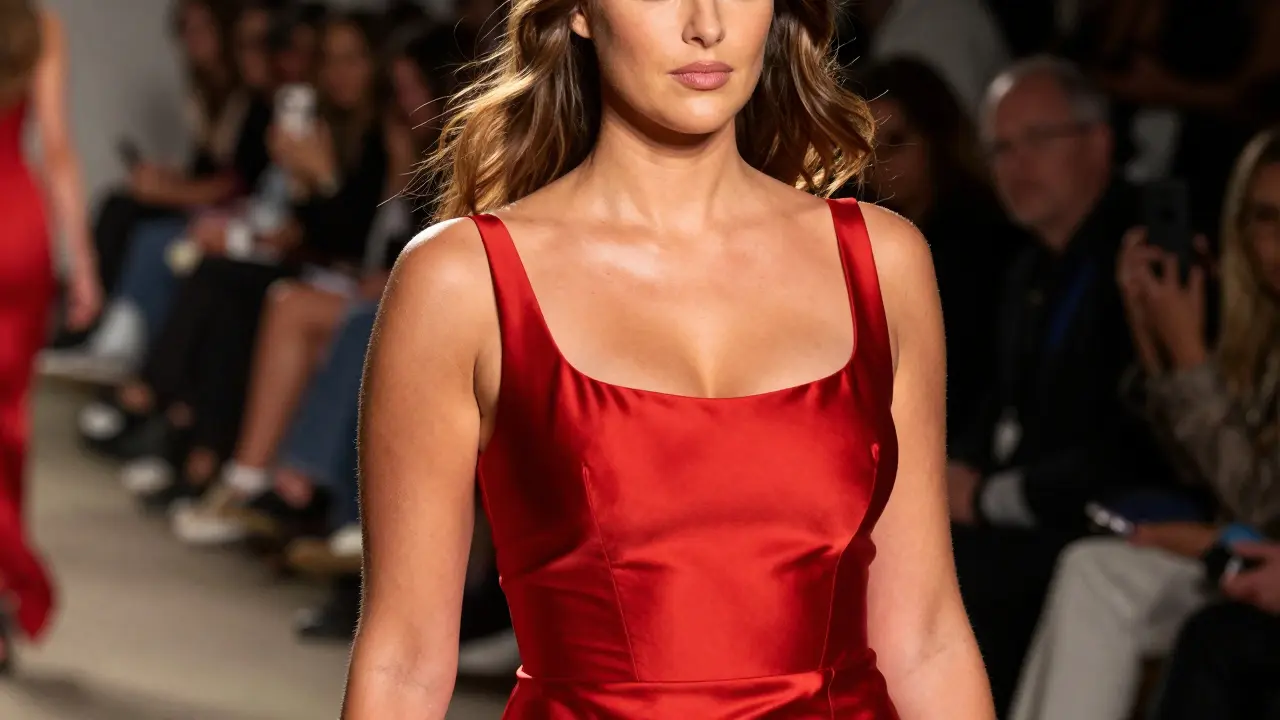
For years, the fashion world told us there was only one kind of beautiful: thin, tall, and symmetrical. But something’s changed. You’ve seen it on billboards, Instagram feeds, and magazine covers. Curvy models aren’t just showing up-they’re taking over. And it’s not just about looks. It’s about who gets to be seen, who gets to feel powerful, and who gets to say, "I belong here."
What Curvy Models Really Mean
When we say "curvy models," we’re not talking about a trend or a buzzword. We’re talking about women with fuller figures-typically size 12 and up-who walk runways, star in ad campaigns, and redefine what fashion looks like. These aren’t plus-size models in the old sense, where they were tucked into a separate section of a catalog. These are the faces of major brands like Savage X Fenty, Aerie, and Universal Standard. They’re on Vogue covers. They’re in Sports Illustrated Swimsuit. They’re not an afterthought. They’re the main event.
It’s not just about body size. It’s about attitude. Curvy models bring confidence that can’t be faked. They don’t apologize for their shape. They own it. And that’s what’s shifting the entire industry.
Why This Movement Matters
Think about this: when you were growing up, did you ever look in the mirror and feel like your body didn’t belong in fashion? You weren’t alone. Studies from the National Eating Disorders Association show that 80% of women have felt pressure to look a certain way because of media. That pressure didn’t just hurt self-esteem-it made people avoid mirrors, skip photos, and even stop buying clothes because nothing "fit" the ideal.
Curvy models change that. Seeing someone who looks like you on a billboard means something. It tells you: your body isn’t wrong. It’s valid. It’s marketable. It’s beautiful.
One real example? Tess Holliday, who started as a blogger and became the first size 22 model signed to a major agency. She didn’t wait for permission. She showed up, stayed loud, and forced the industry to notice. Now, she’s worked with Nike, CoverGirl, and even appeared on the cover of Elle UK. That’s not luck. That’s a movement.
The Rise of Curvy Models: A Timeline
This didn’t happen overnight. Here’s how it unfolded:
- 2007: Ashley Graham became the first plus-size model on the cover of Teen Vogue.
- 2013: Aerie launched its #AerieREAL campaign-no retouching, no filters. Sales jumped 12% in one quarter.
- 2016: Rihanna launched Savage X Fenty with models of all sizes, shapes, skin tones, and abilities. It became a billion-dollar brand.
- 2020: Fashion Week in New York and London started requiring brands to include diverse sizes to be listed on official schedules.
- 2025: Over 30% of major fashion campaigns now feature models size 12 or larger. In 2015, it was under 5%.
The numbers don’t lie. Consumers are voting with their wallets. And brands that ignored this shift? They’re fading.
Where You’ll See Curvy Models Today
You don’t have to dig deep to find them. Look at the big names:
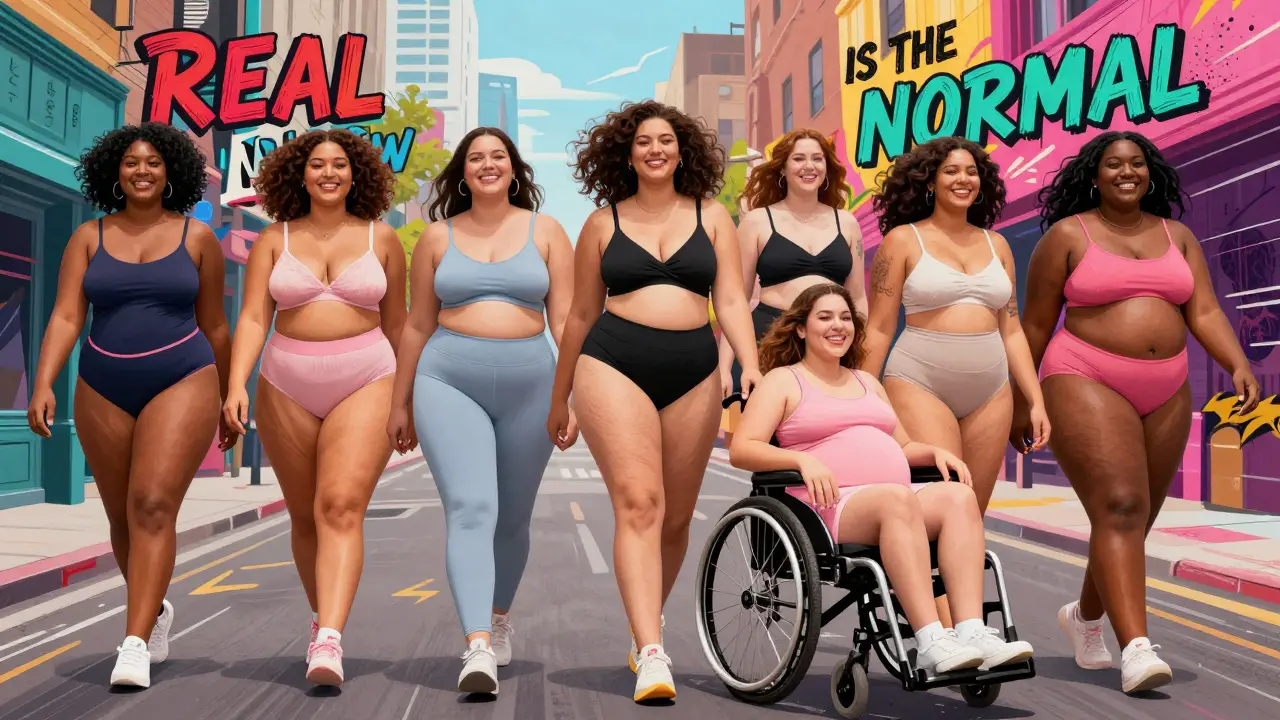
- Savage X Fenty: Every show features models of all sizes, including wheelchair users, transgender models, and postpartum bodies.
- Aerie: Still refuses to retouch images. Their models are real women-stretch marks, cellulite, and all.
- Universal Standard: Offers sizes 00-40. Their runway shows are held in real cities, not just New York, with women from all walks of life.
- Target and H&M: Both now have dedicated curvy model lines. You can buy the same dress worn by a size 6 and a size 24.
Even luxury brands like Gucci and Chanel have started including curvy models in their campaigns. It’s not tokenism anymore. It’s strategy.
How Curvy Models Are Changing the Industry
This isn’t just about representation-it’s about economics.
Women who wear size 14 and up spend over $600 billion annually on clothing in the U.S. alone. That’s more than the entire GDP of Austria. Yet, for decades, brands treated this market like an afterthought.
Now? Designers are hiring curvy models not just to sell clothes-but to design them. Brands like Universal Standard let their models help shape fit, fabric, and style. That’s huge. It means pockets actually fit. Waistbands don’t dig in. Zippers don’t burst. Clothes aren’t just "available"-they’re made for real bodies.
And it’s not just clothing. Beauty brands are following. Fenty Beauty, for example, launched with 40 foundation shades because Rihanna refused to ignore darker skin tones. Now, curvy models are pushing for the same in makeup campaigns-showing how blush looks on fuller cheeks, how highlighter catches on curves, how contouring works on different body shapes.
Challenges Still Left to Overcome
Let’s be real: the fight isn’t over.
Some brands still use "curvy" as a marketing label while keeping their sample sizes at size 6. Others feature one curvy model in a campaign and call it diversity. That’s not inclusion-that’s a photo op.
And backstage? Still tough. Many modeling agencies still push curvy models to lose weight before they’re "ready". Some magazines still refuse to put them on covers unless they’re "edited" to look thinner.
The biggest hurdle? Perception. Even today, some people think curvy models are "just a phase." But this isn’t trendy. It’s a correction. The fashion world is finally catching up to reality: bodies come in all shapes, and beauty isn’t a size.
What You Can Do to Support the Movement
You don’t need to be a model to make a difference. Here’s how you can help:
- Buy from brands that include diverse models. If you like a campaign with curvy models? Buy the product. That’s the loudest vote you can cast.
- Call out tokenism. If a brand uses one curvy model but doesn’t carry sizes above 16? Say something. Tag them. Post about it. Social media moves markets.
- Follow and share curvy models. Instagram accounts like @i_am_ashleygraham, @tessholliday, and @jessicamartinezmodel have millions of followers. Support them. Comment. Like. Share.
- Don’t buy into the myth. You don’t need to be size 4 to wear a dress. You don’t need to be thin to be stylish. Your body is not a problem to fix.
Real Stories, Real Impact
Meet Lizzo. No, not the singer-though she’s one too. This Lizzo is a 28-year-old from Atlanta who started modeling after years of being told she "wasn’t camera-ready." She got her first gig with a local boutique. Then, a photo went viral. Now, she books jobs with brands that actually make clothes in her size. She says: "I didn’t want to be the exception. I wanted to be the norm. And now I am."
Or take Nabela Noor, a Bangladeshi-American model who turned her TikTok into a movement. She posts "what I wear to work" videos in sizes 18-22. Her videos get millions of views. Why? Because women are tired of seeing only one version of beauty.
These aren’t outliers. They’re the new normal.
What’s Next?
The next step? More than models. More than campaigns. We need more designers who build for curves from the start. More fitting rooms that offer sizes beyond 16. More stock on shelves. More editors who stop saying "this doesn’t work on a curvy body" and start asking, "how do we make it work?"
And maybe, just maybe, one day, the word "curvy" won’t be needed at all. Because models will just be models. And beauty? It won’t come with a size tag.
Are curvy models only for lingerie and swimwear?
No. While curvy models were once limited to swimwear and lingerie campaigns, they’re now front and center in high fashion, corporate ads, and luxury brand campaigns. Brands like Gucci, Chanel, and Louis Vuitton have featured curvy models in their runway shows and editorial spreads. This shift reflects growing consumer demand for inclusivity across all fashion categories.
Why do some brands still avoid curvy models?
Some brands cling to outdated ideas that thin bodies sell better, even though data shows otherwise. Others fear backlash from traditional customers or don’t have the infrastructure to produce clothing in larger sizes. But as consumer pressure grows and sales data proves curvy models drive engagement, even hesitant brands are slowly changing.
Do curvy models earn less than straight-size models?
Historically, yes. But that gap is shrinking fast. Top curvy models like Ashley Graham and Tess Holliday now earn the same as their straight-size peers, and in some cases more-especially when they bring in millions in sales. Agencies are realizing that diversity isn’t charity-it’s profit.
Can anyone become a curvy model?
There’s no single "right" body type. Curvy models come in all shapes-hourglass, pear, apple, athletic curves. Agencies now look for confidence, presence, and personality as much as measurements. If you’re comfortable in your skin and willing to put yourself out there, there’s a place for you.
How can I find brands that support curvy models?
Look for brands that show real diversity in their campaigns-not just one token model. Check if they offer sizes 14-24+ in stores. Follow influencers who call out inclusive brands. Websites like BodyPositiveBrand.com and SizeInclusiveFashion.com list verified companies that truly embrace size diversity.


Emily Hutchis
Let me tell you something-I used to hate looking in the mirror. Not because I was overweight, but because every ad, every magazine, every TV show screamed that I was invisible. Then I saw Ashley Graham on a magazine cover-not tucked in some ‘plus-size section,’ but front and center, smirking like she owned the damn world. And I thought: wait… maybe I do too.
It’s not just about clothes. It’s about dignity. When a brand like Aerie refuses to retouch a single stretch mark, they’re saying: your body isn’t a mistake. It’s a masterpiece. And that? That changes how you breathe.
I started following curvy models on Instagram. Not to ‘inspire’ myself, but to remember: I’m not an exception. I’m part of the majority. And guess what? The market’s finally catching up. $600 billion? That’s not a niche. That’s a revolution.
And yeah, some brands still do tokenism-throw one model in a campaign and call it diversity. But we’re not buying it anymore. We’re voting with our wallets. We’re sharing posts. We’re tagging brands. We’re saying: no more invisible women.
One day, ‘curvy’ won’t be a label. It’ll just be ‘model.’ And we’ll all be too busy living to care about the word.
Thank you for writing this. I needed to read it today.